Brookline’s older homes make lead paint a real issue for buyers, sellers, landlords, renters, and agents. Here’s what the 2026 Massachusetts forms mean.
Lead paint is one of those real estate issues that often hides in plain sight.
In Brookline, that matters.
Recent local events are also a reminder that buyers should think beyond unit finishes and budgets: our Brook House oil spill guide highlights how environmental due diligence can affect Brookline condominium purchases in ways standard checklists often miss.
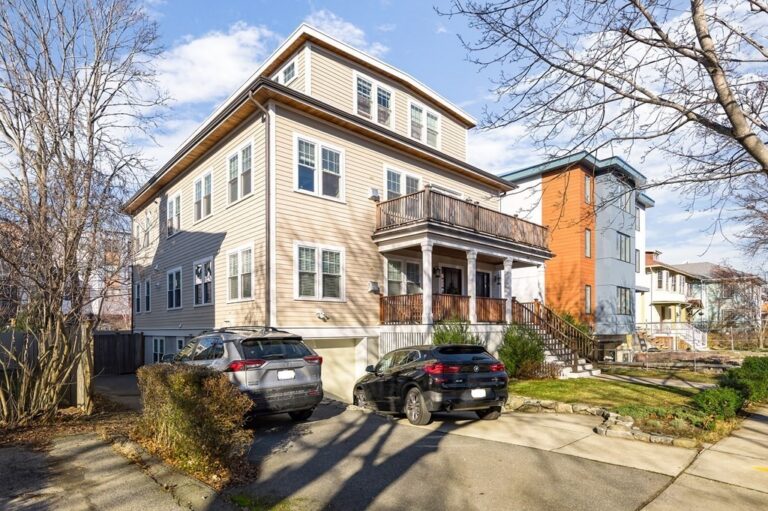
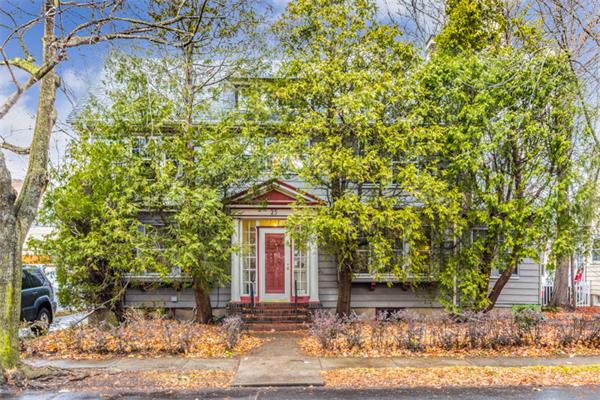
Many of the homes, condos, multifamily buildings, and rental properties that define Brookline’s character were built long before 1978, the year lead-based paint was banned for residential use. These older homes are part of what makes Brookline beautiful: prewar architecture, historic streetscapes, classic brick buildings, converted mansions, two-families, three-families, and early-20th-century condominiums near Coolidge Corner, Washington Square, Brookline Village, Longwood, and the Green Line.
But older housing also comes with responsibility.
Lead paint is not just a disclosure form. It is a health issue, a legal issue, a renovation issue, a rental issue, a family-safety issue, and, in some cases, a pricing issue. For buyers, sellers, landlords, renters, and real estate agents, understanding lead paint is now more important than ever because Massachusetts introduced updated lead paint notification forms in April 2026 that make the responsibilities clearer and more detailed.
The new Massachusetts forms are not simple signature pages. They are full education and certification packets: an 11-page Property Transfer Lead Paint Notification for sales and a 10-page Tenant Lead Law Notification for rentals, both revised April 10, 2026. They explain the health risks, legal obligations, disclosure requirements, inspection rights, rental responsibilities, database-check requirements, and certification obligations for properties built before 1978.
For Brookline, this is not theoretical. Based on my review of the FY2026 Brookline property assessment records you provided, approximately 87% of residential assessment records with a listed year built were built before 1978. Measured by residential units, approximately 85.7% of listed residential units were in properties built before 1978. That does not mean all of these homes contain unresolved lead hazards. Some have been inspected, deleaded, renovated, or brought into compliance. But it does show how deeply relevant lead paint is to the Brookline housing market.
Official 2026 Massachusetts Forms
Download the Updated Lead Paint Notification Forms
Massachusetts updated its lead paint notification packets for both property sales and rentals.
These forms are part of the compliance process for pre-1978 housing and should be reviewed carefully.
Why Lead Paint Matters in Brookline
Brookline is an old-housing community with a family-driven housing market.
That combination matters.
Families move to Brookline for schools, parks, walkability, the Green Line, Longwood Medical Area access, and the town’s neighborhood feel. Many of those families include young children. Brookline also attracts international renters, post-docs, physicians, researchers, graduate students, startup employees, and families relocating for one to three years. Many arrive from outside Massachusetts, and some arrive from outside the United States, with little familiarity with the Massachusetts Lead Law.
That creates a gap between what people assume and what the law actually requires.
A renovated kitchen does not mean a home has been deleaded. New paint does not mean old lead paint is gone. A beautiful prewar condo may still have original windows, trim, doors, porch components, or common-area conditions that matter. A landlord may believe a property is “fine” because it has always been rented without issue, but Massachusetts law imposes specific duties when a child under six lives in a pre-1978 home.
The Massachusetts Lead Law requires the removal or covering of lead paint hazards in homes built before 1978 where children under six live.
That is the starting point.
What Is Lead Paint?
Lead paint is paint or coating that contains lead. In older homes, it may be found on windows, doors, trim, stairs, walls, porches, exterior surfaces, floors, and other painted building components. The new Massachusetts forms also remind consumers that lead exposure can come from contaminated soil, dust from unsafe renovation work, drinking water from lead pipes or fixtures, and certain imported goods.
The most important practical point is this: lead paint is not always visible as a hazard.
A home may look clean, freshly painted, and well-maintained, while still containing lead-based paint beneath newer layers. Lead becomes especially dangerous when it is peeling, chipping, flaking, on friction surfaces such as windows and doors, disturbed during renovation, or present in dust.
In Massachusetts, only licensed lead inspectors and code enforcement lead determinators can identify lead paint hazards for compliance purposes. The new forms explain that lead inspectors commonly use XRF equipment and may also use approved chemical or laboratory testing methods.
Quick Visual Guide
Clues That Lead Paint Might Be Present
You cannot confirm lead paint by sight alone. But in older Brookline homes, these clues should prompt better questions,
record review, and, when appropriate, a licensed lead inspection.
1
Built Before 1978
The most important clue. Pre-1978 homes are more likely to contain lead-based paint, even if they have been renovated.
2
Original Wood Windows
Old double-hung wood windows are a major friction surface. Opening and closing can create paint dust if lead is present.
3
Old Doors and Door Frames
Painted doors, jambs, casings, and thresholds can chip, rub, or wear over time, especially in high-use areas.
4
Older Trim, Baseboards, and Moldings
Decorative wood trim is common in Brookline’s older homes and may have many layers of historic paint beneath newer finishes.
5
Peeling, Chipping, or Alligatoring Paint
Deteriorated paint is a bigger concern than intact paint, especially around windows, stairs, porches, doors, and exterior trim.
6
Painted Stairs, Railings, and Porches
High-contact exterior and common-area surfaces can deteriorate from weather, foot traffic, and repeated repainting.
7
Old Built-Ins and Cabinets
Built-in shelves, cabinets, pantry doors, radiator covers, and painted fireplace surrounds may contain older paint layers.
8
Recent Sanding or Renovation Dust
Renovation work in older homes can disturb lead paint and create dust, even when the finished space looks clean.
9
No Lead Records Available
If there is no Letter of Compliance, inspection report, or Lead Safe Homes history, buyers and tenants should not assume the property is lead-safe.
!
Important: visual clues are not proof.
A home can look beautifully renovated and still contain lead paint beneath newer finishes. A home can also be old and already compliant.
The only reliable way to determine lead hazards for compliance purposes is through a licensed lead inspection.
Why Lead Paint Is Dangerous
Lead exposure is especially dangerous for children under six and pregnant women. The updated Massachusetts forms state plainly that there is no safe level of lead in blood. They also explain that lead exposure can harm the brain, kidneys, and nervous system; slow growth and development; make learning harder; damage hearing and speech; cause behavior problems; and affect muscle and bone growth.
One of the hardest parts of this issue is that most children do not show obvious symptoms. The tenant form states that the only way to detect lead exposure is through a blood test.
For parents, this is the part that should matter most. Lead paint is not a cosmetic defect. It is not like an old boiler, worn carpet, or outdated electrical panel. It is an environmental health issue that can affect a child’s development.
Buyers
- Understand the risk in pre-1978 homes.
- Review available lead records.
- Consider licensed lead inspection if children under six will live there.
- Price compliance and renovation needs intelligently.
Sellers
- Provide required lead notification before the purchase and sale agreement.
- Disclose known lead information.
- Share available inspection and compliance records.
- Check available public lead history.
Landlords
- Use the correct tenant lead notification form.
- Do not discriminate against families with young children.
- Inspect and delead proactively when appropriate.
- Use lead-safe practices for renovation work.
Renters
- Ask for available lead records before signing.
- Review the tenant notification carefully.
- Know that families with children are protected.
- Seek qualified advice if a child under six will live in the unit.
What Changed in the 2026 Massachusetts Lead Paint Forms?
The biggest change is not that Massachusetts invented a new lead law. The underlying framework has existed for years. The change is that the forms are now more comprehensive, clearer, and more explicit about responsibilities.
For sales, the new Property Transfer Lead Paint Notification requires sellers and real estate agents to provide the entire document to prospective buyers of pre-1978 homes before signing a purchase and sale agreement, lease with option to purchase, or foreclosure memorandum. Sellers and agents must disclose known lead information, provide inspection reports or compliance documents if they exist, and check the Massachusetts Lead Safe Homes database.
For rentals, the new Tenant Lead Law Notification requires property owners or agents and tenants to sign two copies of the Tenant Certification Form before renting a pre-1978 housing unit. The owner or agent must provide the tenant with one signed copy. The form also requires disclosure of known lead paint or hazards, delivery of available reports, checking the Lead Safe Homes database, and record retention.
The Lead Safe Homes database is important because it allows the public to look up whether a property has prior lead inspection history and, in some cases, whether hazards were found or a Letter of Compliance exists.
This is a major practical point for agents and property owners: the new forms make it harder to treat lead disclosure as a passive signature exercise. The forms now point directly to records, reports, database checks, acknowledgments, and document retention.
2026 Lead Forms
Lead Paint Compliance Is a Process, Not Just a Signature
The updated Massachusetts forms make the practical workflow clearer: disclose what is known,
check available records, provide documents, certify receipt, and retain the file.
1
Identify Property Age
Confirm whether the home or rental unit was built before 1978.
2
Check Records
Look for inspections, Letters of Compliance, Interim Control, and Lead Safe Homes history.
3
Disclose Known Information
Share known lead paint, lead hazards, and available reports with buyers or tenants.
4
Use the Correct Form
Sales and rentals have different Massachusetts notification and certification packets.
5
Keep the File
Retain signed forms and related documents for the required recordkeeping period.
Lead Paint in a Brookline Sale
For buyers, the seller’s primary obligation is disclosure, not automatic deleading.
In a sale of a pre-1978 property, the seller must provide the required lead notification and disclose known lead-based paint or lead hazards, including available reports. The buyer must be given a 10-day opportunity, or longer if agreed, to conduct a lead inspection, unless the buyer waives that opportunity. The updated property transfer form also states that there is no requirement for a lead inspection before a sale, though it is highly recommended.
This distinction matters.
In real life, many Brookline buyers do not conduct a lead inspection as part of ordinary due diligence. They may do a general home inspection, but a general home inspector is not usually a licensed lead inspector. The Massachusetts form specifically states that most home inspectors are not lead inspectors.
So the buyer should understand the risk. If the property was built before 1978 and there is no Letter of Compliance, the buyer should assume lead may be an issue until proven otherwise.
That does not mean the buyer should panic. Lead paint is resolvable. But it is a matter of responsibility, timing, and price. If a buyer has children under six, it becomes the buyer’s responsibility after purchase to provide a lead-safe environment for those children. Brookline’s own fair housing guidance makes the same point: with sales, the seller must inform the buyer of lead paint dangers, the lead law, and known information, but once the buyer owns the home, it is the buyer’s responsibility to de-lead if children under six live there.
That is how buyers should frame the issue: not as a reason to automatically walk away, but as a cost, timing, and safety consideration.
If the home needs deleading, what is the likely cost? Is the buyer planning renovations anyway? Are windows being replaced? Are children moving in immediately? Is there time to complete work before occupancy? Is the seller’s price already reflecting the condition, or should the buyer factor it into negotiations?
In Brookline, where older homes are expensive and competition can be intense, lead paint should be part of the buyer’s strategic analysis, not an afterthought.
Lead Paint in Brookline Rentals
The rental side is often more sensitive because landlords are not just selling an asset. They are providing housing.
Under Massachusetts law, pre-1978 rental units where children under six live must be free from lead paint hazards and in compliance with the Lead Law. The new tenant form states that owners of homes built before 1978 must make a home lead-safe if a child under six lives there, and that the only way to know whether a unit has lead hazards is to have it inspected by a licensed lead inspector.
The form also explains two compliance concepts: a Letter of Compliance and a Letter of Interim Control. A Letter of Compliance is a legal letter signed and dated by a licensed lead inspector saying there are no lead paint hazards or the home has been deleaded. A Letter of Interim Control is temporary; it indicates urgent lead hazards have been addressed, is valid for one year, and may be renewed for another year if monitored and maintained, but the owner must ultimately obtain full compliance.
For Brookline landlords, my advice is direct: inspect and de-lead.
Not because every landlord is legally required to delead every unit in advance of every tenancy. The legal trigger depends on the property, age, condition, and whether a child under six lives there. But as a professional ownership strategy, proactive compliance is the better path.
It protects children. It reduces liability. It avoids crisis-mode repairs after a lease is signed. It gives landlords confidence when renting to families. It protects the long-term value of the asset. It also creates a better rental experience in a town where many tenants are highly educated, highly mobile, and often choosing Brookline specifically because they want a safe, stable environment for their children.
This matters especially in Brookline because many rental households are not local in the traditional sense. A family may arrive from Israel, France, India, China, Canada, California, or New York for a medical fellowship, research position, startup role, graduate program, or temporary relocation. They may not understand Massachusetts lead law. They may not have a U.S. credit score. They may have young children. A landlord or agent who mishandles lead paint questions can create serious legal and fair housing problems.
The Massachusetts forms are explicit: landlords cannot refuse to rent to, refuse to renew, or evict persons or families with children under six because of known or suspected lead in the property.
The Massachusetts Attorney General’s landlord-tenant guidance also states that a landlord cannot refuse to rent to a tenant with young children because there is lead paint in the unit or because the landlord does not want to pay for de-leading.
That should be clear enough for every Brookline landlord: the solution is compliance, not avoidance.
Renovations Can Create Lead Risk
One of the most misunderstood lead issues is renovation.
A property can be safe enough under normal conditions but become dangerous when old painted surfaces are disturbed. Sanding, scraping, demolition, window replacement, porch repair, and painting prep can create lead dust. In older Brookline buildings, this matters because renovations are constant: condo updates, kitchen renovations, window work, exterior painting, porch repairs, common-area maintenance, and pre-listing improvements.
The new tenant form states that any renovation work in pre-1978 rental housing, with or without children, must be done safely, using EPA Lead-Safe Certified firms or state-approved lead safe renovators.
Brookline also requires permits for lead removal through the Department of Public Health & Human Services, and Brookline’s lead-safe removal application materials state that contractors must submit required documentation before regulated work begins.
This is especially relevant for sellers. A seller may think, “Let’s just repaint before listing.” But if the home was built before 1978, paint prep must be handled carefully. The wrong contractor can create the very hazard the seller was trying to cover.
What I Do for Brookline Clients
When I advise Brookline buyers, sellers, landlords, and renters, I try to move lead paint out of the “paperwork” category and into the “property strategy” category.
For sellers, that means gathering records early, checking whether any lead inspection or compliance history exists, and understanding what must be disclosed before the property is under agreement.
For buyers, it means understanding that a pre-1978 home may require additional investigation, especially if young children will live there. It also means remembering that lead paint is typically resolvable, but the cost and timing should be evaluated intelligently.
For landlords, my advice is stronger: inspect and delead whenever possible. A landlord who owns older Brookline housing should not view lead compliance as a burden to avoid. It is part of operating professionally in a family-oriented, high-value rental market.
For renters, especially families with young children, it means asking direct questions, reviewing the required notification, requesting available records, and understanding that Massachusetts law protects families from being denied housing because of lead paint. My best advice: Never share the age of your children, even if asked! You are only required to disclose the number of dependents (under 18), not the actual age – practically, there’s no reason to ask this question other than to discriminate.
For agents, it means making sure the right forms, records, database checks, disclosures, and conversations happen at the right time. The goal is not to create fear. The goal is to protect people, reduce surprises, and make better real estate decisions.
What Buyers Should Ask Before Buying a Pre-1978 Brookline Home
Buyers should ask whether the seller has any lead inspection reports, risk assessments, Letters of Compliance, Letters of Interim Control, or other lead-related records. They should ask whether the property appears in the Lead Safe Homes database. They should ask whether any deleading work has been performed and whether it was documented by a licensed inspector.
They should also ask how the property will be used. A buyer without young children may evaluate the issue differently than a buyer with a toddler. A buyer planning major renovations may incorporate lead-safe work into a broader renovation plan. A buyer moving in immediately with children under six needs to think more carefully about timing, occupancy, and compliance.
The key is to price the risk intelligently.
Lead paint is not always a deal-breaker. In Brookline, if every buyer automatically rejected pre-1978 homes, much of the town would be off the table. But lead paint can affect value, renovation scope, financing comfort, insurance concerns, and timing. It belongs in the conversation before the buyer is emotionally and financially committed.
What Sellers Should Do Before Listing
Sellers of pre-1978 homes should not wait until the purchase and sale stage to think about lead paint.
Before listing, sellers should look for any prior lead inspection reports, Letters of Compliance, Letters of Interim Control, deleading records, renovation records, or relevant correspondence. They should check the Lead Safe Homes database. They should disclose what they know and avoid guessing about what they do not know.
A seller does not have to make the home lead-free simply to sell it. But a seller does need to comply with disclosure requirements. The updated property transfer form states that sellers and real estate agents must disclose known information about lead paint and provide copies of lead inspection reports, Letters of Compliance, or Letters of Interim Control.
A prepared seller is in a better position. If records exist, organize them. If no records exist, say that clearly and complete the form properly. If the property is likely to attract families with young children, consider whether a proactive inspection or pricing strategy makes sense before going to market.
What Landlords Should Do Before Renting
For Brookline landlords, the best practice is simple: know the property before the tenant asks.
A landlord should determine whether the unit was built before 1978, whether lead records exist, whether the unit appears in the Lead Safe Homes database, whether there is a Letter of Compliance, and whether any recent or planned work might disturb painted surfaces.
The updated tenant form requires owners and agents to notify tenants about the potential presence of lead paint, provide information about health risks, disclose known lead paint or hazards, provide available records, check the Lead Safe Homes database, and keep the signed notification and certification form for at least three years after the start of the rental.
The professional landlord does not treat this as a technicality. The professional landlord treats it as part of the service being provided.
Brookline tenants often pay premium rents. In return, they expect a serious, well-managed, legally compliant rental experience. Lead compliance is part of that.
Landlord Warning
Do Not Assume “Nothing Will Happen”
In Massachusetts, lead exposure is not discovered only after a visible crisis. Young children are routinely screened for lead, which means an unresolved lead hazard can surface through the public-health system.
!
A child’s blood test can turn a hidden property issue into an urgent legal and health matter.
If a child living in a pre-1978 rental unit tests with an elevated lead level, the issue may no longer be theoretical. The property can become the focus of inspection, enforcement, liability, insurance, tenant-relocation, and deleading questions.
9–12 mo.
Children should be tested at least once between 9 and 12 months.
Age 2
Children are tested again at age 2.
Age 3
Children are tested again at age 3.
Age 4
Children are tested again at age 4 if they live in a high-risk community or high-risk environment.
Lead risk is discoverable.
The state does not need to wait for obvious symptoms. Blood testing can reveal exposure.
Old assumptions are dangerous.
“It has always been fine” is not a compliance strategy for a pre-1978 rental.
Proactive compliance is safer.
Inspection, records, lead-safe work, and deleading planning are far better than reacting after a child tests positive.
Screening schedule summarized from Massachusetts lead testing guidance. This visual is for general education only and is not legal, medical, or environmental advice.
What Renters Should Know
Renters should understand that a landlord is allowed to ask how many occupants will live in a unit, but landlords and agents must be extremely careful not to use family status or the presence of children as a reason to deny housing.
If a renter has young children and is considering a pre-1978 unit, they should ask whether the owner has a Letter of Compliance or other lead records. They should review the Tenant Lead Law Notification carefully. They should understand that if the home has not been inspected, no one should casually promise that it is “lead safe.”
Renters should also know that Massachusetts law prohibits rental discrimination based on the presence of children under six because of lead paint. The new tenant form states this directly.
For international families in Brookline, this is especially important. A family new to Massachusetts may not know what to ask, may not understand the form, and may assume that a high-rent apartment in a prestigious town has already been cleared. That assumption may be wrong.
The Brookline Data: Why This Issue Is So Relevant Here
The FY2026 Brookline assessment data you provided shows why lead paint deserves a serious local guide.
Among residential assessment records with a listed year built, approximately:
Brookline Housing Stock
Most Brookline Residential Properties Were Built Before 1978
Construction year is not a lead inspection. But in a town with a large pre-1978 housing base,
age is a useful starting point for understanding why lead paint remains so relevant in Brookline.
87%
Approximate share of residential assessment records with a listed year built before 1978
61%
Approximate share of residential records built before 1940
| Year Built |
Share of Residential Records |
Visual |
| Before 1900 |
10.0% |
|
| 1900–1919 |
25.7% |
|
| 1920–1939 |
25.2% |
|
| 1940–1959 |
10.3% |
|
| 1960–1977 |
15.8% |
|
| 1978 or later |
13.0% |
|
Based on FY2026 Brookline assessment records provided for analysis. These figures use listed year-built data and do not determine whether any specific property contains lead paint or lead hazards.
That means roughly 61% of residential assessment records with a year built were built before 1940, and approximately 87% were built before 1978.
By property type, the relevance is just as clear:
Property Type Risk Indicator
Pre-1978 Housing Is Common Across Brookline Property Types
Brookline’s lead paint relevance is not limited to one housing category. Older single-families,
condos, two-families, and three-families all require informed disclosure, rental compliance,
and renovation planning.
Single-Family Records
90.8%
Approx. pre-1978 share
Condominium Records
84.6%
Approx. pre-1978 share
Two-Family Records
98.1%
Approx. pre-1978 share
Three-Family Records
99.0%
Approx. pre-1978 share
| Assessment Category |
Approximate Pre-1978 Share |
Visual |
| Single-family records |
90.8% |
|
| Condominium records |
84.6% |
|
| Two-family records |
98.1% |
|
| Three-family records |
99.0% |
|
Year built is a screening indicator, not a lead determination. Some pre-1978 properties have been inspected, deleaded, renovated, or brought into compliance.
These numbers are not a lead inspection. They do not prove that a specific home has lead hazards. They do not account for properties that have already been deleaded. But they do show that lead paint is not a marginal topic in Brookline. It is built into the age profile of the housing stock.
The Bottom Line
Lead paint is serious. It is also manageable.
The mistake is treating it casually.
For buyers, lead paint should be part of the cost and safety analysis, especially when children under six will live in the home. For sellers, it should be handled through accurate disclosure, records, and preparation. For landlords, it should be addressed proactively as part of professional property ownership. For renters, it is a legal right and health issue worth understanding before signing a lease. For agents, it is part of competent representation in an older, high-value housing market like Brookline.
Brookline’s older homes are part of the town’s appeal. But older homes require informed ownership.
That is the real message of the 2026 Massachusetts lead paint forms: this is not just paperwork. It is protection.
FAQ: Brookline Lead Paint
Does every pre-1978 Brookline home have lead paint?
Not necessarily, but many may. A pre-1978 construction date means lead-based paint is possible. The only way to know whether a home has lead paint hazards for compliance purposes is through a licensed lead inspection.
Does a seller have to delead before selling a Brookline home?
Generally, no. In a sale, the seller’s obligation is primarily to provide the required notification and disclose known lead information and records. After purchase, if a child under six lives in the home, the owner is responsible for complying with the Massachusetts Lead Law.
Can a buyer inspect for lead paint before purchase?
Yes. The Massachusetts property transfer form states that, after receiving the notification, prospective buyers have at least 10 days, or longer if agreed, to conduct a lead inspection if they choose, except in foreclosure sales.
Is a regular home inspection the same as a lead inspection?
No. Most home inspectors are not licensed lead inspectors. A lead inspection must be performed by a licensed lead inspector.
What is a Letter of Compliance?
A Letter of Compliance is a legal document signed and dated by a licensed lead inspector stating that there are no lead paint hazards or that the home has been deleaded.
What is a Letter of Interim Control?
A Letter of Interim Control is a temporary compliance document showing that urgent lead hazards have been addressed after a risk assessment. It is typically valid for one year and may be renewed for another year if properly monitored and maintained, but the owner must ultimately obtain full compliance.
Can a Brookline landlord refuse to rent to a family with young children because of lead paint?
No. Massachusetts law prohibits landlords from refusing to rent, refusing to renew, or evicting families with children under six because of known or suspected lead paint. The updated tenant form states this directly.
Should Brookline landlords proactively inspect and delead?
In my opinion, yes. For landlord-clients, this is the responsible and strategic approach. It protects children, reduces liability, expands the tenant pool, improves the rental experience, and supports long-term property value.
Does renovation create lead risk?
Yes. Renovation, repair, and painting work in pre-1978 housing can disturb lead paint and create lead dust. The Massachusetts forms state that such work in rental housing must be performed safely using lead-safe work practices by properly certified firms or state-approved renovators.
Where can I check a property’s lead history?
Massachusetts provides the Lead Safe Homes database, where the public can look up available lead inspection and compliance history for a property.





 Sold
Sold