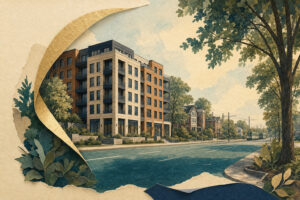
The Brookline Housing Authority opened 115 affordable units at 32 Marion Street—among the town's largest projects in decades. What it means for the market.
When a luxury market adds 115 deeply affordable apartments in one stroke, the impact is more structural than statistical. Brookline’s Coolidge Corner neighborhood—where market rents average $3,300–$3,500 per month—now hosts a six-story, all-electric building where residents pay no more than 30 percent of income toward rent, anchored by project-based Section 8 assistance. For buyers, sellers, and landlords navigating a town where median single-family prices exceed $1.5 million, 32 Marion Street doesn’t shift comps, but it does reframe expectations around what large-scale development will look like going forward.
What the 115-Unit Development Means
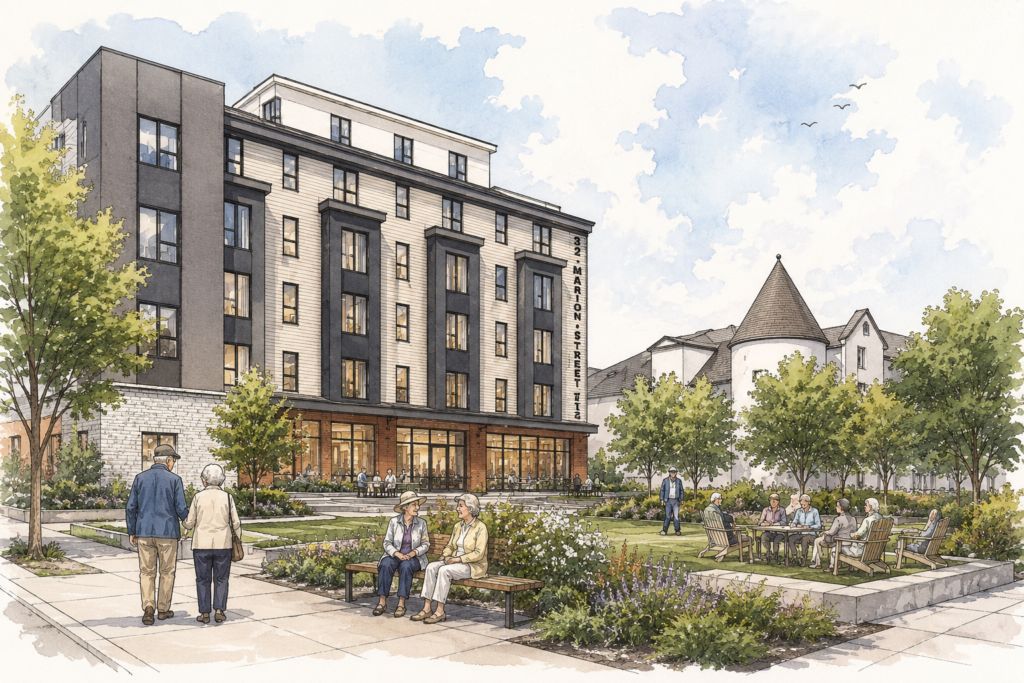
The Brookline Housing Authority officially opened the 115-unit affordable housing development at 32 Marion Street, marking among the largest such projects in Brookline in recent decades. Built on the former Colonel Floyd Apartments site, the building nearly doubles the number of deeply affordable units on the parcel while meeting Phius Passive House standards. The ribbon-cutting ceremony drew state and local officials, underscoring the project’s significance in a town where affordability pressures are structural rather than cyclical.
The development is financed through low-income housing tax credits, tax-exempt bond financing, town Affordable Housing Trust contributions, and bank loans. All 115 apartments are supported by project-based Section 8 assistance, ensuring long-term affordability in a neighborhood where median advertised rents hover around $3,300–$3,500 per month. This financing structure—typical of contemporary housing authority projects in high-cost regions—allows the Brookline Housing Authority to function as both operator and developer, leveraging federal tools to replace aging stock with modern, energy-efficient inventory.
Market Implications for Brookline Real Estate
Luxury condo sellers near Coolidge Corner: The presence of a large, regulated affordable building may temper expectations that every new construction project will command top-tier pricing, though direct price impact on market-rate units tends to be negligible when income-restricted inventory operates under separate regulatory frameworks.
Investors evaluating Brookline multi-family properties: Watch for increased scrutiny of energy performance and affordability contributions in future permitting cycles, as 32 Marion Street sets a precedent for passive-house standards and mixed-finance models that may influence zoning and incentive frameworks.
Buyers priced out of Brookline homes: This project does not create pathways into market-rate ownership, but it signals that the town is willing to deploy public land and capital for deeply affordable housing, which may reduce political pressure for inclusionary requirements that affect private development timelines and unit mix.
Landlords in Coolidge Corner and surrounding pockets: The addition of 115 rent-stabilized units will not materially shift vacancy or asking rents in the private market, but it does underscore the gap between subsidized and market-rate inventory—a gap that remains wide even as the town expands its affordable stock.
Developers planning projects in Brookline neighborhoods: The passive-house certification and all-electric design may become baseline expectations for future municipal approvals, raising construction costs but potentially streamlining permitting for projects that meet similar sustainability benchmarks.
Single-family homeowners near new development corridors: Large-scale affordable projects like 32 Marion Street demonstrate that the town will prioritize density on underutilized parcels, particularly those already in public ownership, which may shift neighborhood character without affecting nearby single-family valuations in the short term.
Renters seeking affordable housing through lottery systems: While this project expands the town’s subsidized inventory, the income-restricted units are allocated through waitlists and preference systems rather than open-market availability, meaning most market-rate renters will continue to face the same supply constraints and pricing pressures.
Town officials and planners: The successful delivery of 115 units under a mixed-finance model may encourage replication on other Housing Authority-controlled sites, potentially accelerating the pace of affordable development without requiring zoning changes or private-sector participation in the near term.
What Buyers and Sellers Should Watch
For buyers, the takeaway is that Brookline’s affordability strategy relies on discrete, publicly financed projects rather than broad inclusionary mandates, meaning market-rate inventory will likely remain supply-constrained and premium-priced. Sellers should recognize that large-scale affordable developments signal municipal priorities but do not typically depress nearby resale values when income restrictions are clear and permanent. Landlords may see continued upward rent pressure in unregulated units, as the town’s high-cost fundamentals—proximity to Boston, institutional employers, and limited land—remain unchanged by any single project, no matter how large.
Related reading: For a broader look at how Brookline policy choices shape housing supply and pricing, see Why Paying Brookline Officials Matters for Housing, Taxes, and Local Decision-Making and our latest Brookline real estate market update.
Source: Source



 Sold
Sold