Three concurrent infrastructure projects near St. Mary's Green Line stop create short-term uncertainty but long-term value for Beacon Street properties.
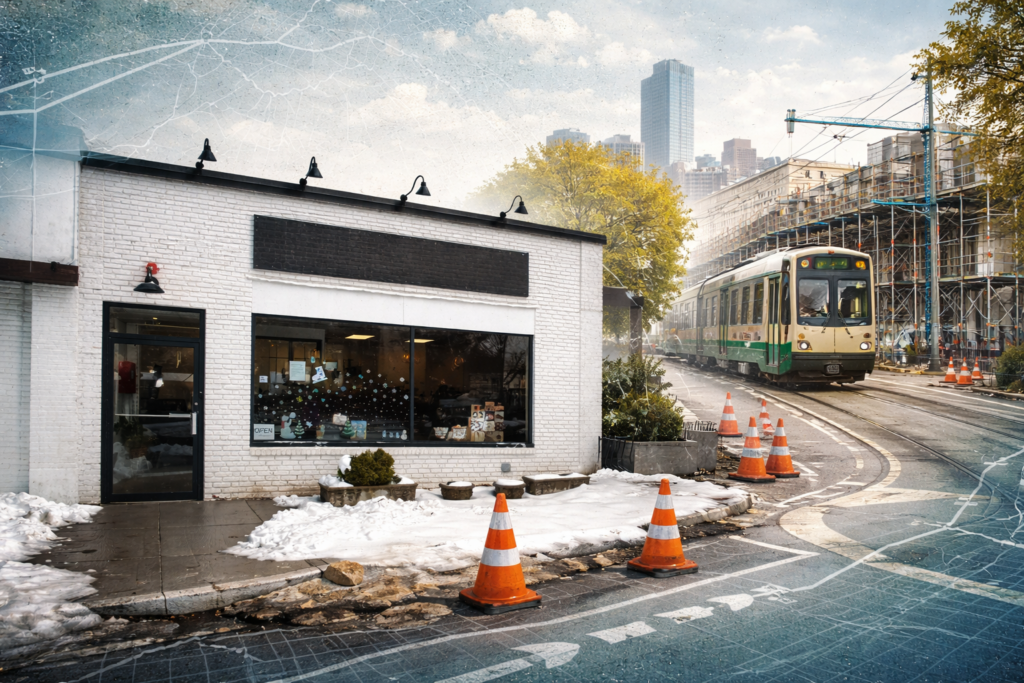
When three major public projects converge on the same two-block stretch of Brookline, property owners, tenants, and buyers need to recalibrate their expectations. A proposed residential addition at 1020–1024 Beacon Street, MBTA Green Line C Branch accessibility upgrades, and the Beacon Street Bridle Path restoration—backed by $2 million in federal earmarks and $1 million from the Town—are all moving forward near the St. Mary’s stop. Japonaise Bakery, which reopened in 2023 after a comprehensive renovation that closed the business in 2021, now faces potential displacement or temporary relocation as its landlord pursues a Zoning Board of Appeals case to add ten residential units above the retail space.
Why the Confluence Matters for Beacon Street Properties
The St. Mary’s Green Line stop serves as the primary transit anchor for this corridor, and accessibility upgrades beginning in early 2026 may temporarily reduce foot traffic and complicate pedestrian access. At the same time, the Beacon Street Bridle Path—a 2.25-mile pathway originally designed by Frederick Law Olmsted in the late 19th century—is entering detailed design, with preliminary proposals expected in early 2026. The Beacon Street Bridle Path Design Review Committee held its first meeting in October 2025 and will convene approximately 6–12 times over 16 months. These overlapping timelines create operational uncertainty for ground-floor retail tenants and may depress short-term asking prices for commercial buildings.
Buyers exploring Coolidge Corner and Washington Square corridors: Properties within two blocks of transit and commercial overlay zones may see reduced foot traffic and parking availability during 2026–2027 construction, but long-term walkability and transit appeal should improve once projects are complete—making this a potential value entry point for patient investors.
Commercial tenants and small business owners: Operational disruption risk is real during MBTA construction and potential reconfiguration of street access, loading, and parking; however, Beacon Street’s role as a mixed-use transit corridor may attract new customers once improvements are delivered.
What Sellers and Landlords Should Watch
Sellers of Beacon Street properties: Short-term uncertainty from construction may depress asking prices in 2026–2027, but long-term upside is likely if the bridle path and MBTA upgrades deliver as promised—consider waiting for preliminary design clarity in early 2026 before listing if possible.
Landlords and property managers: Tenant pressure for lease concessions or early departures may increase during construction; proactive communication with MBTA and project teams, plus construction-related force majeure language in new leases, will help manage expectations and reduce turnover risk.
Developers and investors: Land assemblies and zoning relief cases on Beacon Street may accelerate as developers seek to capitalize on new transit and pedestrian corridor value, though historic district protections, tree preservation mandates, and parking tradeoffs remain significant constraints—monitor Zoning Board of Appeals decisions closely.
Operational Realities for Mixed-Use Properties
Japonaise Bakery’s situation illustrates a broader challenge for Beacon Street retail in the L-1 zoning district: even well-capitalized tenants with loyal customer bases face displacement risk when landlords pursue residential infill. The bakery, which relocated to Brookline in 1991 and has been run by Takeo Sakan since 2016, invested heavily in renovations before learning of the development proposal. The Zoning Board of Appeals held a public hearing on August 28, 2025, but no final decision has been issued. For brokers advising multi-family investors, this case underscores the importance of tenant communication and staging plans before filing zoning relief applications.
Source: brookline.news



 Sold
Sold