

Every now and then, the same question comes up – sometimes out loud, more often quietly:
Is a real estate commission actually worth it?
It’s a fair question. In Brookline, the dollar figures are not small. On a $1.53 million median transaction, a typical commission can range from roughly $30,000 to $45,000.
On a $3,600-per-month rental, a one-month broker fee is $3,600.
The instinct to look at those numbers and ask how to avoid them is completely rational.
But it’s also incomplete.
A real estate commission in Brookline is not a line item – it’s the price of four specific forms of value:
pricing discipline, net outcome optimization, access to inventory, and protection against costly mistakes.
If those exceed the fee, paying is rational. If they don’t, it isn’t.
The Right Question
Most consumers ask:
“How do I avoid the commission?”
The better question is:
“Given my situation, does a professional add more value than they cost?”
Because the answer isn’t universal.
The Four Pillars of Value
1. The “Same Money” Pillar (Buyers)
Most buyers assume:
If I don’t hire an agent, I save the commission.
In practice, a strong buyer’s agent changes what you pay for the asset – not just what you’re charged.
That shows up in:
- Price discovery – understanding true market vs. marketing price
- Pre-offer negotiation – reading motivation, competition, timing
- Offer structuring – designing a package sellers trust to close
In Brookline’s 2026 market, many listings are priced below market to generate bidding wars.
So the real question becomes:
Do you actually know what “market” is – on this property, this week?
Algorithms can’t answer that.
Local judgment does.
2. The “Net More” Pillar (Sellers)
A common argument:
“I can hire a photographer and a stager and save the commission.”
That’s true – and it misses where the value lives.
Photography and staging are inputs.
Outcome is driven by positioning, exposure, and execution.
The real advantage shows up in four places:
Exposure to the right buyers
Not just listing the property – but orchestrating how and when it reaches the market, including private networks and pre-market positioning.
Knowing what to test – and how to react
Every listing is a live experiment.
Early feedback must be interpreted correctly – or the market takes control.
Transaction execution
Brookline deals involve real complexity – inspection issues, condo docs, financing risk.
Experience here protects both price and outcome.
Negotiation positioning
Direct seller involvement often weakens leverage.
A broker controls communication, timing, and tone – while keeping the seller out of the spotlight.
Representation and disclosure boundaries
What you say – and how you say it – matters.
In a sophisticated buyer pool, mistakes can cost money or create liability.
Case Study: When Positioning Breaks, the Market Takes Over
Consider 45 Beverly Road.
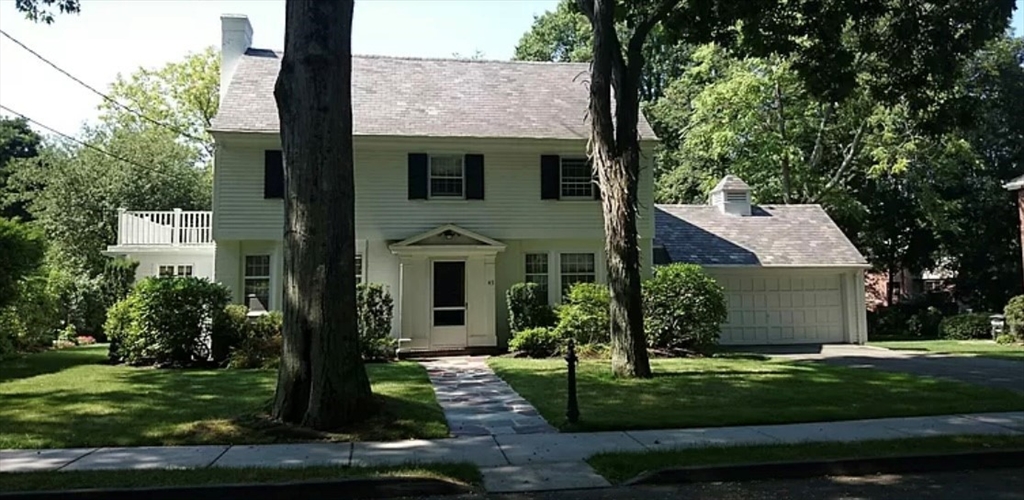
The seller set an offer deadline – then accepted an offer 14 days after coming to market, ultimately closing nearly $300,000 below the original asking price.
That sequence tells you almost everything:
- the initial pricing didn’t create real competition
- the deadline exposed itself as a bluff
- early market feedback wasn’t corrected fast enough
From there, leverage shifted.
The buyer, represented, stepped into a weakened position and captured the spread.
No dramatic failure. No single mistake.
Just positioning that didn’t hold – and execution that didn’t recover it.
In Brookline, that’s enough.
3. The Access Pillar
Brookline is an off-market-heavy market.
- Sales: private exclusives, agent networks, pre-market deals
- Rentals: top inventory often placed broker-to-broker
Unrepresented buyers and renters are not seeing the full market.
They’re seeing what’s left.
So the real question isn’t:
“Is the fee worth it?”
It’s:
“Am I willing to pay for access to the market I actually want?”
4. The Downside Pillar
This is where the real money lives.
Mistakes in real estate are asymmetrically expensive.
Three types matter most:
Hyper-local risk
Experience doesn’t transfer cleanly.
A repeat buyer elsewhere is a first-time buyer in Brookline.
Market sophistication
Brookline buyers notice everything – pricing, presentation, positioning.
Early missteps can cost 5–8% of value.
Emotional decision-making
High stakes lead to reactive decisions.
A professional provides judgment without emotional bias.
Case Study: Execution Recovers Value – and Protects It
Consider 125 Lee Street.
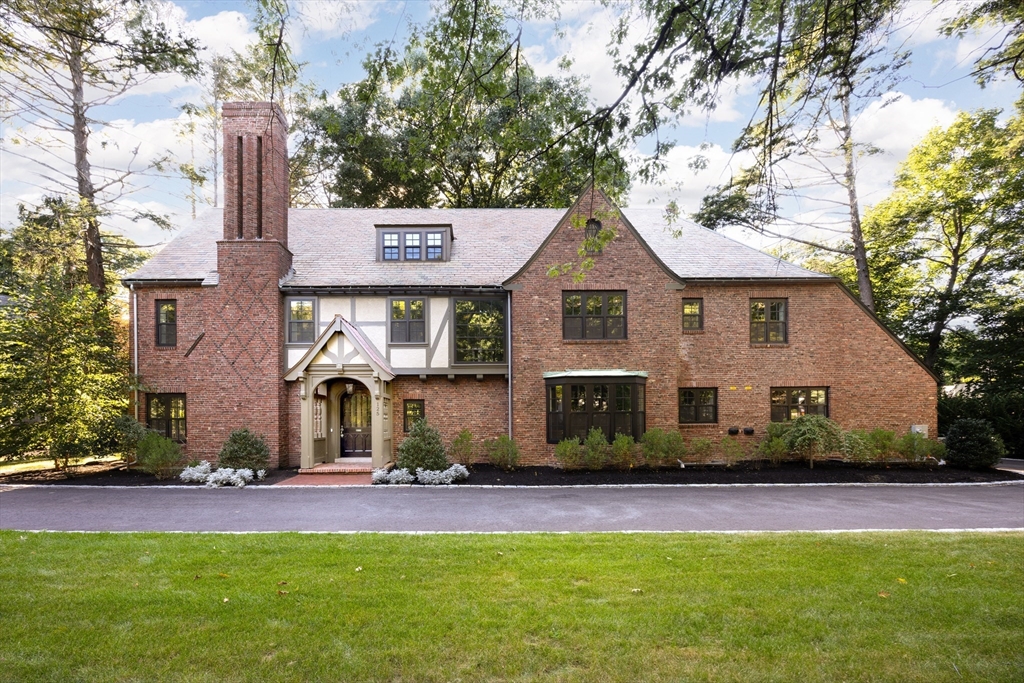
The property had been listed for approximately 14 months with two brokers – without a sale.
The issue wasn’t just price.
It was positioning.
What changed
- Pricing aligned with market expectations
- Stale condition addressed
- A time-bound incentive campaign re-engaged buyers and brokers
Within 14 days, multiple offers were generated and a deal was reached.
What happened next
The deal fell apart due to an underground oil tank.
At that point, most listings “go BOM” (Back on Market) and losing leverage.
Instead, prior exposure was leveraged.
A second buyer (one of three initial offers) stepped in at the same price, and the deal closed.
What this illustrates
Execution doesn’t stop at acceptance – it starts there.
- Positioning created the market
- Strategy created competition
- Execution preserved leverage – even after failure
No price reduction.
No reset.
In Brookline, that’s the difference.
When the Fee Isn’t Worth It
There are situations where the commission doesn’t make sense.
Specifically, when the deal already exists:
Seller already has a buyer
Buyer already has the property
Landlord and tenant already aligned
At that point, the role shifts to execution – not market creation.
A flat-fee or limited-scope approach may be appropriate.
But here’s what most people miss
When one side “saves the commission,”
the other side usually tries to capture part of it.
Through:
- lower offers
- higher expectations
- tighter negotiation
The market reprices the savings.
So the real question becomes:
How much of the commission are you actually keeping?
The Bottom Line
A real estate commission isn’t a tax.
It’s a price – for:
- better decisions
- stronger execution
- broader access
- and fewer costly mistakes
In Brookline’s market, those things can make a meaningful difference.
Sometimes they don’t.
The answer isn’t in the percentage.
It’s in the value.
FAQ
Is it worth paying a real estate agent in Brookline?
In many cases, yes – especially in competitive or complex transactions. Agents add value through pricing strategy, negotiation, and access to off-market inventory.
Can I sell my home FSBO in Brookline?
Yes, but execution matters. Poor positioning or weak early market response can significantly impact final sale price.
Do buyers save money by not using an agent?
Not necessarily. Without representation, buyers often lack pricing discipline and negotiation leverage, which can lead to overpaying.
Are real estate commissions negotiable in Massachusetts?
Yes. Since the 2024 industry changes, commissions are more transparent and negotiable, particularly on the buyer side.
When should I skip hiring an agent?
When the deal already exists – such as selling to a known buyer or buying a specific property – you may consider limited or flat-fee representation.
Why is Brookline considered a complex market?
Brookline combines high prices, older housing stock, sophisticated buyers, and significant off-market activity – making execution and local expertise critical.