
Climate-driven storms and humidity are accelerating mold growth in Brookline homes. What buyers, sellers, and landlords need to know about water risk.
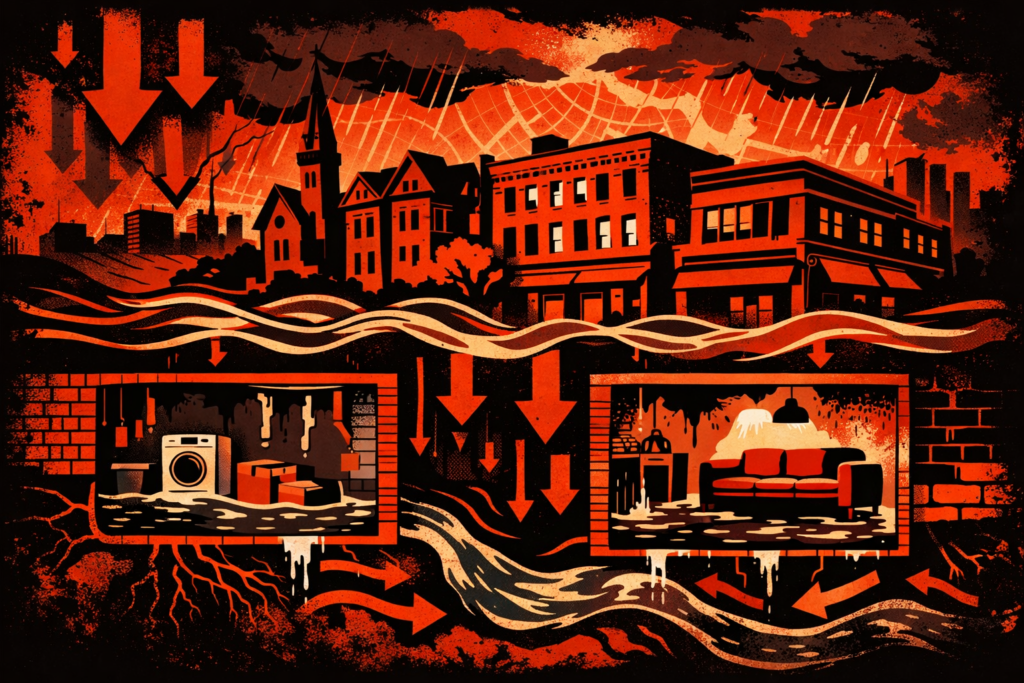
A February 25, 2025 WBUR report highlights that climate change is intensifying storms and amplifying heat and humidity—two conditions that accelerate mold growth and transform it from a household nuisance into a public health threat. For Brookline buyers and sellers, the implications are immediate: properties near former wetlands, culverted streams, or with garden-level exposure face hidden moisture risks that standard inspections may miss.
Why Brookline’s Water Risk Extends Beyond FEMA Flood Zones
Brookline has less than 1% of its land area inside a FEMA flood zone, yet 2010 flood damage was significantly broader than flood-insurance claims alone suggested. Many historic flood-damage locations sit close to former wetlands and waterways, even when outside mapped FEMA boundaries. Coolidge Corner and Washington Square properties with below-grade units or finished basements may experience recurring seepage tied to buried stream corridors and shallow bedrock that concentrates runoff.
Mold can begin forming within 24 to 48 hours after water damage occurs, making rapid response critical. Ideal home humidity should be kept between 30% and 50% to prevent mold growth, but climate-driven storms and poor ventilation in older buildings make that threshold harder to maintain.
The Financial Impact: Resale Value and Remediation Costs
In my experience with Brookline properties, homes with documented mold history face significant buyer hesitation and reduced offers. Average mold remediation costs range from $2,200 to $2,400 per project, with whole-house remediation commonly falling between $10,000 and $30,000. Specialists charge $10 to $25 per square foot, and costs rise when foundation waterproofing or drainage upgrades are required.
Buyers: Request specialized moisture meter testing and cavity wall sampling during inspection, especially for properties near Hall’s Pond, Muddy River, or former stream corridors. Review the Town’s Stormwater Model and Flood Vulnerability Project mapping to understand subsurface moisture patterns that standard inspections may overlook.
Sellers: Obtain professional mold inspection and full remediation documentation before listing any property showing signs of past seepage, water stains, musty odors, or repeated sump-pump use. Buyers now expect transparent disclosure of moisture history; failing to disclose may trigger litigation under implied warranty of habitability.
Landlords: Conduct annual moisture audits and upgrade HVAC and exhaust systems in multi-family buildings with older mechanical systems, poor ventilation, or below-grade units. Massachusetts does not mandate mold disclosure, but courts recognize negligence claims. Legal costs and tenant liability exposure are rising as climate-driven humidity makes prevention harder.
What Buyers and Renters Should Watch
Massachusetts home inspection protections took effect October 15, 2025, meaning sellers cannot condition sales on waiving inspections. Mold and water damage are common inspection red flags; if found, buyers have leverage to request repairs, credits, or price reductions. Garden-level condos and older brownstones face recurring seepage and humidity issues that dehumidifiers alone cannot solve; drainage upgrades are expensive and may require excavation.
Renters: Request moisture inspection as part of lease negotiation and photograph baseline conditions, especially in older apartment buildings with a history of storm or water damage. Massachusetts does not require landlords to disclose high concentrations of mold to prospective tenants, and tenants can pursue rent withholding or repair-and-deduct strategies only if mold renders an apartment uninhabitable (consult your attorney).
Lenders and Appraisers: Cross-reference Brookline’s former wetland maps and the updated FEMA boundaries released in June 2025; appraisals may be affected by foundation concerns or documented mold history, and lenders may require higher down payments or additional documentation for properties with documented water intrusion.
Source: WBUR
Related Brookline reading: Weekly market update (Mar 4–11, 2026) and Brookline homes guidance.
About Elad Bushari
Elad Bushari is an Executive Vice President at Compass and a leading Brookline, Massachusetts real estate agent with over $1 Billion in career sales and 22+ years of experience. He represents buyers, sellers, landlords, tenants and developers across Brookline's most sought-after neighborhoods, including Coolidge Corner, Fisher Hill, Chestnut Hill, Washington Square, and Brookline Village.
A former Inc. 5000 founder and REALTOR® Magazine "30 Under 30" honoree, Elad specializes in luxury single-family homes, condominiums, and multi-family investments throughout Greater Boston. His data-driven approach and deep local knowledge help clients navigate Brookline's competitive market with confidence.
Elad Bushari's Profile