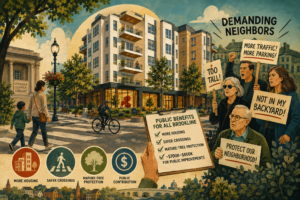
Town Meeting voted 217-20 to approve major Route 9 redevelopment. What this decades-in-the-making project means for Chestnut Hill real estate and beyond.
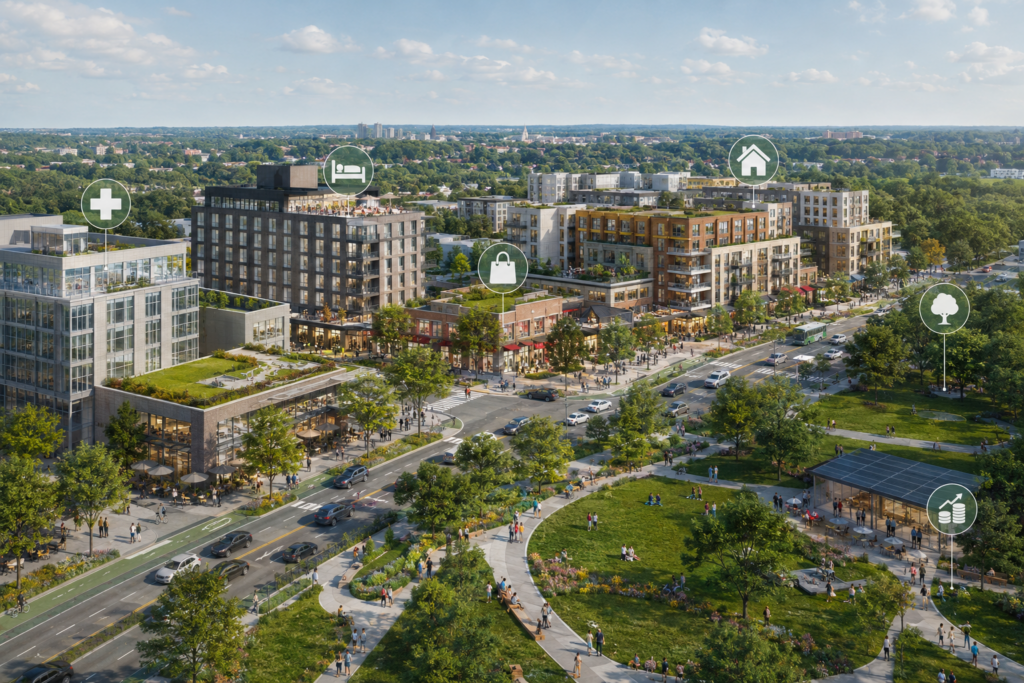
Brookline Town Meeting has approved zoning for what may become the town’s largest redevelopment in decades, transforming a largely vacant office park on Route 9 into a mixed-use project. For a broader look at why this corridor matters beyond a single Town Meeting vote, read our Chestnut Hill redevelopment analysis. The 217 to 20 vote clears a critical hurdle for City Realty’s proposal, though permitting and construction will take several years. For buyers, sellers, and investors watching Chestnut Hill, this rezoning signals a shift in how Brookline approaches commercial corridors and housing supply.
What the Rezoning Actually Approves
Town Meeting’s decision allows City Realty to move forward with a mixed-use development on a site that has sat mostly vacant. Select Board member Michael Rubenstein emphasized the project’s potential for commercial tax revenue and new housing. The vote surpassed the two-thirds majority requirement comfortably, suggesting broad support despite typical concerns about density and traffic.
Chestnut Hill Homeowners: Watch for construction timelines and phasing details as permitting progresses, since multi-year projects often create short-term disruption before delivering long-term neighborhood amenities that may support property values.
Condo Buyers Near Route 9: New Brookline homes in this development will likely target a different price point and buyer profile than existing Chestnut Hill inventory, potentially creating more options for first-time buyers or downsizers who’ve been priced out of single-family pockets.
Commercial Tax Revenue and What It Means for Residential Owners
The project is projected to generate substantial commercial tax revenue, which matters for every Brookline property owner. A stronger commercial tax base tends to ease pressure on residential tax rates, though the actual impact depends on total assessed values and override votes in future years.
Sellers in Adjacent Neighborhoods: Proximity to new retail and dining amenities often becomes a selling point, but expect buyers to ask detailed questions about construction schedules and whether the final product matches early renderings.
Investors Watching Brookline: Large-scale redevelopment can signal shifting demand patterns, particularly if new housing units attract renters or buyers who previously looked only at Brookline neighborhoods farther from Route 9 commercial corridors.
What Buyers Should Watch Next
Zoning approval is one milestone, but permitting, financing, and construction timelines remain uncertain. Buyers considering Chestnut Hill should track when City Realty files detailed site plans and whether the project phases housing before or after commercial space. The gap between approval and occupancy can span years, and market conditions may shift during that window.
Renters Considering a Purchase: If this development delivers significant new rental inventory, it may create a brief window where existing Brookline apartments face softer pricing, potentially freeing up down-payment savings for a home purchase in a different pocket.
Families Prioritizing Walkability: Mixed-use projects often promise pedestrian-friendly design, but the reality depends on how ground-floor retail activates and whether the site connects meaningfully to existing sidewalks and transit stops along Route 9.



 Sold
Sold