

Most real estate risk announces itself politely.
A roof has an age. A boiler has a service tag. A condo budget has numbers. Even a tired kitchen is visible the moment a buyer walks through the door.
Foundation risk is different.
It sits below the building, below the inspection, below the marketing copy, and often below the consciousness of the market itself – until the walls begin to crack, the floors begin to shift, or an engineer is finally called in to explain what the building has been quietly absorbing for decades.
That is what makes 1080 Beacon Street such an important Brookline case study.
According to the project team, the seven-story, 30-unit building, originally constructed in 1909, experienced significant settlement, cracking, and structural instability tied to its original foundation system. The building ultimately required a full structural retrofit, including new pile systems and reinforced support below the structure.
This is not a story about deferred maintenance.
It is a story about what happens when the assumptions beneath a building no longer hold.
A Brookline Building With a Boston Problem
To understand 1080 Beacon, you have to understand the broader regional context.
In parts of Greater Boston, particularly in areas developed during periods of rapid expansion in the late 19th and early 20th centuries, buildings were often constructed on wood pile foundations driven deep into the ground.
These piles can last for generations – but only under one condition: they must remain fully submerged in groundwater.
When groundwater levels drop and oxygen reaches the wood, decay can begin.
That risk is well documented in Boston, where the Boston Groundwater Trust actively monitors groundwater levels to protect buildings supported by timber piles.
Brookline is not Back Bay. It would be inaccurate to suggest widespread risk.
But 1080 Beacon Street proves that the underlying issue does not stop at municipal boundaries.

What the Data Says About Brookline
Brookline’s character is defined by its older housing stock. That’s part of its appeal – but it also shapes its risk profile.
An analysis of Brookline’s FY2026 property assessment data shows:
- ~43% of buildings were constructed before 1920
- ~72% were constructed before 1940
That doesn’t imply structural problems.
But it does mean that a significant portion of the town’s housing stock was built in an era with:
- Different foundation systems
- Different structural assumptions
- No modern waterproofing standards
- No long-term reserve planning frameworks
Brookline Housing Stock by Age
Based on FY2026 property assessment data, Brookline’s housing stock is heavily weighted toward prewar construction.
43%
Built before 1920
72%
Built before 1940
451
Pre-1920 larger buildings
99
On Beacon Street
The more relevant subset is not every old home – it’s larger, older multifamily and condo buildings, where structural systems are shared and capital exposure is collective.
Using a conservative filter (pre-1920 + larger or denser buildings), approximately 451 properties fall into this higher-relevance category, with Beacon Street showing the highest concentration.
Again, this is not a list of problems.
It’s a map of where deeper due diligence matters most.
What a Seasoned Inspector Actually Sees
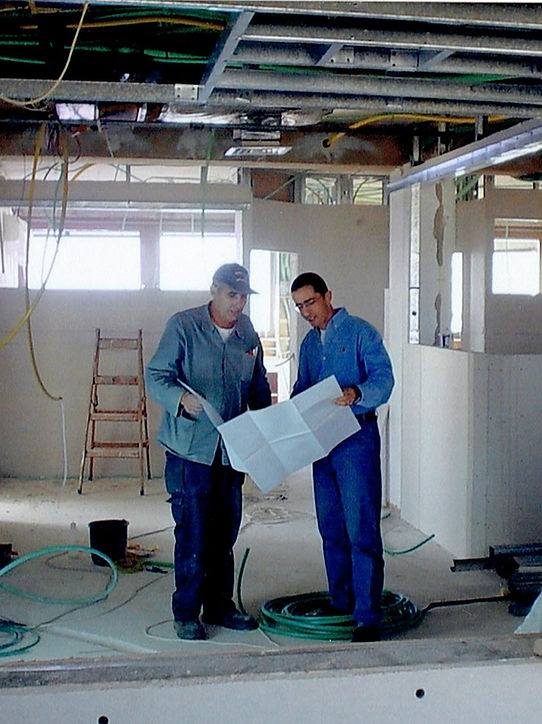
To move beyond theory, I spoke with Doron Bracha, owner of Accent Home Inspection in Chestnut Hill.
Doron is not just a home inspector – he’s a Registered Architect (RA), LEED Accredited Professional, and certified inspector who has evaluated hundreds of properties in and around Brookline. He is also my trusted inspector, and someone I regularly rely on.
His perspective is grounded, practical, and notably non-alarmist.
“Having inspected hundreds of homes/buildings in and around Brookline, I find that most of them have solid foundations, built with concrete, fieldstone and/or brick.”
That’s an important baseline.
But he also highlights the historical nuance that connects directly to the 1080 Beacon case:
“Older buildings constructed between 1870–1900… often had foundations based on wood piles. Those were driven about 20 feet below ground and are not visible. The wood piles must remain entirely submerged in groundwater to prevent decay.”
And when that condition changes:
“When water tables fall… these wooden foundations can become exposed to oxygen and start to rot – a problem specifically monitored by organizations like the Boston Groundwater Trust.”
That’s the invisible layer most buyers never see.
What Buyers Get Wrong About Older Buildings
One of the most consistent misunderstandings Doron sees:
“Buyers may assume that the buildings have been renovated over the years, all issues have been addressed and all systems have been updated. That is often not the case.”
Older buildings frequently retain:
- Sloped or uneven floors
- Cracks in walls and ceilings
- Legacy electrical or plumbing components
- Materials like asbestos in plaster
None of these automatically indicate a structural failure.
But they do require adjusted expectations and informed evaluation.
The Red Flags That Actually Matter
Not every crack is a problem. Not every slope is structural.
But certain patterns should trigger deeper review.
Doron breaks it down clearly:
Exterior:
- Building not plumb (visibly leaning)
- Bulging or slanted walls
- Deformed window or door openings
Basement / Foundation:
- Foundation walls not vertical
- Moisture intrusion (especially in finished areas)
- Evidence of hidden cracking
Interior:
- Sloped floors beyond typical age-related variation
- Cracks in walls or ceilings
- Doors sticking due to frame distortion
“If we see signs of problems… and there is no documentation of structural inspections or repairs – we recommend consulting an engineer.”
That last point is critical.
The issue is often not the symptom.
It’s the absence of documentation explaining it.
Inspection Field Guide
The Red Flags That Actually Matter
Exterior
- Building appears out of plumb
- Bulging or slanted walls
- Cracks in masonry or exterior walls
- Distorted window or door openings
Basement / Foundation
- Foundation walls not vertical
- Moisture intrusion or staining
- Cracks hidden behind finished areas
- Signs of prior patching or movement
Interior
- Noticeably sloped floors
- Cracks in walls or ceilings
- Doors that stick or frames out of square
- Uneven transitions between rooms
Rule of thumb: one minor sign may simply reflect age. Multiple signs, worsening conditions, or no documentation explaining them should trigger a deeper structural review.
The Difference Between Old and Understood
Doron puts it simply:
“Old is not always a bad thing.”
In fact, many older buildings were:
- Built with durable materials
- Constructed with craftsmanship and longevity in mind
- Architecturally superior to modern counterparts
But he also draws the line:
“It is quite typical to see signs of wear and tear… as long as they are not excessive.”
That’s the distinction buyers need to understand.
There is a difference between:
- Normal aging
- Unexplained movement
And that difference is not always obvious without experience.
The Real Risk: What We Don’t Know
A 1080 Beacon-style structural failure is rare.
But the broader issue is not collapse – it’s uncertainty.
The market prices visible features efficiently:
- layout
- finishes
- parking
- location
It is far less efficient at pricing:
- foundation systems
- groundwater sensitivity
- prior structural work
- reserve adequacy
- engineering history
That’s where risk and opportunity lives.
Where Structural Uncertainty Tends to Concentrate
Not all Brookline buildings carry the same risk profile. Older, larger buildings in dense corridors deserve closer attention.
- Beacon Street corridor – highest concentration of pre-1920 multifamily buildings
- Coolidge Corner / Washington Square – dense prewar housing stock
- Brookline Village – mixed historic building types
- Boston-adjacent areas – overlapping soil and development conditions
Note: This reflects building age and density—not confirmed structural conditions.
When the Story Changes Mid-Transaction
Most real estate deals don’t fall apart because of something obvious.
They unravel when something hidden becomes visible.
In my experience, the issue is rarely just the condition itself. It’s the moment the buyer realizes that what they were shown, and what actually exists, don’t match.
In one case, an inspection revealed that a property had experienced a prior fire. There was no disclosure, and the condition wasn’t obvious during showings.
Had that information been known upfront, the buyers would not have proceeded with the inspection at all – we would have moved on.
A prior fire is not a minor detail. It is a material fact.
Once uncovered, the issue wasn’t just the fire itself – it was the uncertainty around what had been repaired, what hadn’t, and what else might be unknown. But just as importantly, it raised a second question: what else was not being disclosed?
In another transaction in Newton, a foundation crack had been physically concealed behind moving boxes. The inspector insisted on moving them, revealing a condition that had not been visible during the showing. That moment changed the tone of the entire deal.
In both cases, the transactions didn’t collapse because of the defect alone.
They collapsed because the story changed.
The buyer went from making a confident decision to questioning what else might not be visible.
That shift, from confidence to uncertainty, is where deals die.
What Buyers Should Actually Do
A standard home inspection is essential – but not always sufficient.
For older Brookline buildings, buyers should ask for:
- Engineering reports
- Trustee meeting minutes
- Reserve studies
- Capital plans
- History of settlement or structural repair
- Any documentation referencing piles, underpinning, or foundation work
And most importantly: If something looks off, and there’s no documentation, bring in a structural engineer.
Old but Understood
- Documented foundation system
- Engineering reports available
- Clear repair history
- Strong reserves and planning
- Transparent association records
Old and Unknown
- No documentation of foundation type
- No engineering history
- Visible symptoms without explanation
- Weak or unclear reserves
- Reactive (not proactive) management
What Sellers and Associations Should Understand
This is where strategy matters.
Buyers don’t fear known conditions nearly as much as unknown ones.
A building with:
- clear engineering documentation
- known foundation system
- no active movement
- documented repairs (if applicable)
…is often easier to sell than a comparable building with no information at all.
For associations and sellers, that suggests a shift:
Not necessarily routine inspections on a fixed schedule – but proactive understanding and documentation of the building’s structural systems.
Because in real estate, uncertainty doesn’t just create risk.
It destroys leverage.
“Most older buildings in Brookline have solid foundations – but when conditions change below the surface, the risk is not always visible.”
— Doron Bracha, RA, LEED AP, Accent Home Inspection
The Real Lesson of 1080 Beacon
1080 Beacon Street is not evidence of a widespread structural crisis in Brookline.
It is something more useful:
A reminder that in older real estate markets, the most expensive risks are often the least visible.
Brookline buyers are sophisticated. They understand value, location, and design.
But even sophisticated buyers can underestimate what lies beneath the surface, especially during a bidding war.
That is the danger of buying on assumptions.
And in a market built on history, those assumptions deserve to be tested.
FAQ
Do Brookline buildings have wood pile foundations?
Some do, particularly older buildings from the late 19th century. 1080 Beacon Street is a documented example, though not representative of all buildings.
Does this mean other Beacon Street buildings have the same issue?
No. Age and location alone do not determine foundation condition.
How common is structural failure like 1080 Beacon?
Rare. The more common issue is incomplete information about structural history.
Can a home inspection identify foundation problems?
It can identify visible symptoms. Subsurface conditions often require engineering review.
Should buyers avoid older buildings?
No. Many are excellent assets. The key is understanding the difference between normal aging and unresolved structural issues.