On May 20, 1776, Brookline became the first Massachusetts town to pledge independence. That heritage still shapes property premiums in 2026.
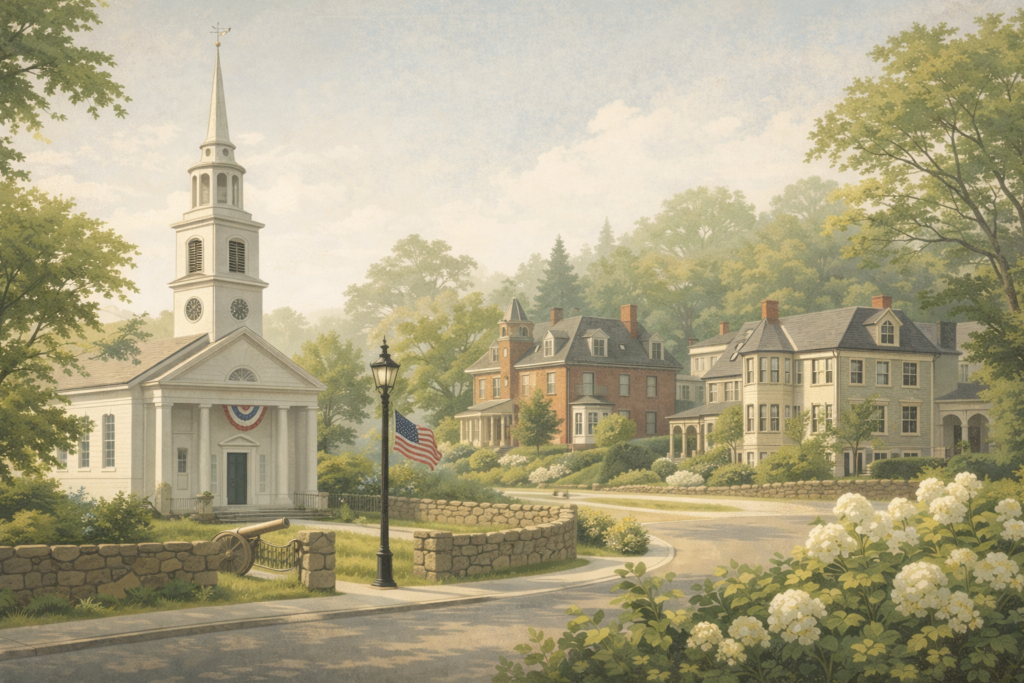
Brookline’s claim as the first town in Massachusetts to pledge support for independence on May 20, 1776—six weeks before the Declaration of Independence—remains a defining element of the town’s identity. As Massachusetts launches its 250th anniversary commemoration in 2026, that Revolutionary War narrative is resurfacing in ways that may influence buyer psychology, neighborhood premiums, and preservation policy across Brookline’s seven local historic districts.
A recent article from Brookline.news explores a 250-year-old document shedding light on the town’s Revolutionary War heroes. Town Meeting records from January 31, 1776, show Brookline voted to provide enlisted soldiers with firearms, blankets, bayonets, powder, and forty shillings. The town’s commitment continued through the war, with records described as “full of ardor for the American cause.”
How Heritage Positioning Affects Brookline Property Values
Heritage matters most in neighborhoods with intact period architecture and documented historical significance. Fisher Hill, Pill Hill, and Chestnut Hill contain the densest concentrations of 19th-century homes and command measurable premiums over post-WWII subdivisions. Buyers seeking provenance and narrative—particularly those relocating from other heritage-rich markets—tend to pay more per square foot in these pockets, though sales velocity may be slower.
Luxury buyers seeking brand distinction: Brookline’s median home value of approximately $1.25M–$1.68M is partly anchored to heritage, schools, and cultural identity; the 250th anniversary provides a seasonal marketing hook for homes within or near historic districts, especially those with documented lineage or proximity to Revolutionary-era sites.
Sellers in local historic districts: Brookline’s seven local historic districts require design review for exterior modifications, adding four to eight weeks to renovation timelines; buyers may need clear disclosure of restrictions and costs before closing, particularly for properties requiring HVAC, roofing, or window upgrades.
What Buyers and Sellers Should Watch in 2026
The Massachusetts 250 initiative, launched in 2026 with $1.5 million in grants to 37 organizations, may generate increased foot traffic and media attention around Brookline’s Revolutionary heritage. Properties near documented sites—including two homes tied to the Underground Railroad at 9 Toxteth Street and 182 Walnut Street—may see heightened institutional and cultural interest, though not necessarily residential demand.
Developers and investors in mixed-use projects: Heritage context may impose additional design constraints when combined with Brookline’s inclusionary zoning requirement of 15% affordable units in projects with four or more units; expect extended entitlement timelines and possible cash-in-lieu contributions instead of on-site affordable units in historic overlay zones.
Renters and affordability-focused households: While heritage branding supports Brookline’s premium positioning, it does not address the immediate housing crisis; 44% of residents named housing as their top concern in a February 2026 survey, and median rents remain between $2,835 and $3,500 per month, creating tension between identity marketing and economic reality.
Brookline’s decision to resist Boston annexation six times between 1870 and 1879 – with voters rejecting annexation 707 to 299 in October 1873 – reflects a long-standing commitment to independence that still shapes town governance and zoning debates today. That same civic engagement attracts certain buyer cohorts but also generates contentious development conversations that can delay projects and affect inventory.
Source: Brookline.News
About Elad Bushari
Elad Bushari is an Executive Vice President at Compass and a leading Brookline, Massachusetts real estate agent with over $1 Billion in career sales and 22+ years of experience. He represents buyers, sellers, landlords, tenants and developers across Brookline's most sought-after neighborhoods, including Coolidge Corner, Fisher Hill, Chestnut Hill, Washington Square, and Brookline Village.
A former Inc. 5000 founder and REALTOR® Magazine "30 Under 30" honoree, Elad specializes in luxury single-family homes, condominiums, and multi-family investments throughout Greater Boston. His data-driven approach and deep local knowledge help clients navigate Brookline's competitive market with confidence.
Elad Bushari's Profile
Filed under: