The $800,000 recital hall expansion in Brookline Village shows cultural infrastructure investment and amenities that justify premium valuations.
When a nonprofit commits $800,000 to expand a performance venue in one of Massachusetts’ most expensive residential markets, it demonstrates institutional confidence in both community support and long-term neighborhood stability. The Brookline Music School’s recital hall project shows the cultural infrastructure investments that help justify Brookline’s premium home values.
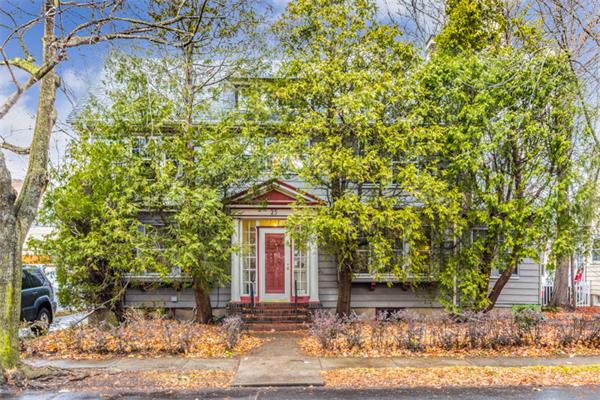
The Brookline Music School plans to expand its recital hall by approximately 400 square feet, doubling seating capacity from 60 to 120. The school, founded in 1924 and operating from the historic Hill-Kennard-Ogden House at 25 Kennard Road since 1994, serves over 900 students. The project received unanimous support from the Brookline School Committee and Select Board authorization for preconstruction permits on January 6, 2026. As of January 2026, the school had secured approximately $670,000 in commitments, leaving roughly $130,000 still needed.
Cultural Infrastructure and the Brookline Premium
Research on arts facilities and property values suggests that cultural vitality contributes to home values in measurable ways, similar to school quality or open space access. In Brookline, where buyers already pay premiums for school access, the presence of mature cultural institutions reinforces the town’s positioning as a high-amenity community.
The expansion occurs in Brookline Village, a walkable neighborhood with restaurant and cultural access. The school’s location adjacent to Lincoln School in a historically significant 1843 Greek Revival building contributes to the neighborhood’s architectural character and institutional density—factors that tend to support long-term value stability even as broader market conditions shift.
What Buyers Should Watch
Families prioritizing cultural access may find the doubled performance capacity signals increased programming and community events within walking distance of Lincoln School catchment homes, though buyers should verify current enrollment availability and program offerings rather than assuming proximity guarantees access.
Investors evaluating neighborhood trajectory should note that nonprofit capital commitments of this scale often indicate donor confidence in neighborhood stability and institutional staying power, though the town-owned property and lease negotiation process introduces some uncertainty about long-term arrangements that warrant monitoring.
Sellers near cultural anchors may benefit from the prestige effect documented in arts-rich neighborhoods, though quantifying this premium in Brookline’s already-elevated market requires careful comparable analysis rather than broad assumptions.
Buyers concerned about fiscal sustainability should recognize that the Music School’s private fundraising model contrasts with Brookline’s structural budget challenges, highlighting the distinction between privately-funded cultural amenities and tax-supported public services—a nuance that matters when evaluating which premium-justifying factors face fiscal pressure and which remain insulated.
Proximity to institutional anchors creates walkable access to cultural programming, with the Music School’s location in the Hill-Kennard-Ogden House adding to the concentration of civic and educational institutions in Brookline Village.
Construction timeline considerations matter for nearby residents, as the June through October 2026 construction window may temporarily affect street parking and pedestrian access near Kennard Road, though the relatively short five-month timeline limits disruption compared to larger-scale institutional projects.
Fundraising completion risk remains a factor, with approximately $130,000 still needed as of January 2026, meaning buyers interested in the expanded venue should monitor whether the school meets its capital campaign goals.
Long-term lease arrangements introduce institutional uncertainty, as the Music School operates on town-owned property under lease terms that periodically require renewal, differing from privately-owned cultural venues with permanent facilities.
The Music School expansion reflects a broader pattern: established institutions making long-term facility investments even as near-term market dynamics shift. For Brookline homes buyers, the presence of such projects may matter less for immediate value impact than as indicators of institutional confidence and community identity—factors that tend to support resilience during market corrections.
Source: Source




 Sold
Sold