Brookline adopted Vision Zero in April 2025 after over 1,800 crashes. What traffic calming and infrastructure changes mean for buyers and neighborhoods.
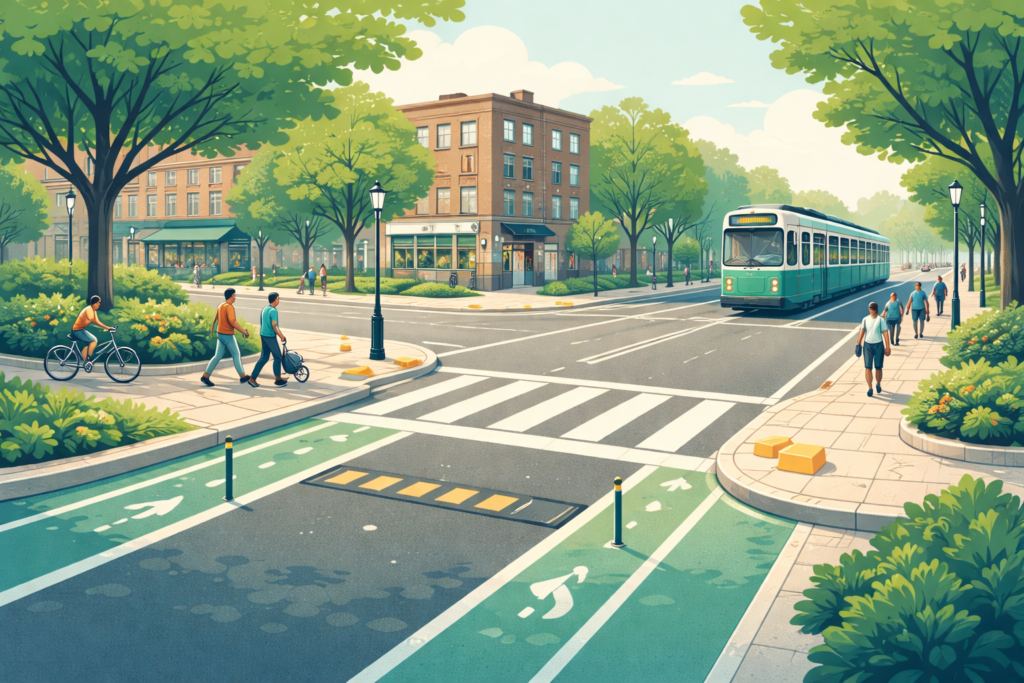
When a town commits $410,683 to speed humps and adopts a formal Vision Zero policy, it signals more than concern for safety—it reflects emerging preferences around walkability, street design, and livability that increasingly drive buyer decisions across Brookline neighborhoods.
The Data Behind Vision Zero and What Changed in 2025
Brookline formally adopted a comprehensive Vision Zero Action Plan in April 2025, driven by a sobering record: over 1,800 crashes between 2019 and 2023, resulting in more than 350 injuries and three deaths. The plan shifts the town from reactive enforcement to proactive infrastructure redesign—prioritizing speed management, data-driven street prioritization, and the principle that traffic deaths are preventable, not inevitable. The Transportation Board approved a new Traffic Calming Policy alongside Vision Zero, establishing systematic procedures for identifying high-risk corridors and implementing physical interventions like speed humps, raised crosswalks, and curb extensions.
The first major implementation came quickly: in Fall 2025, Brookline awarded a $410,683 contract to install 37 speed humps across five streets—Buckminster Road, Clinton Road, Tappan Street, Beaconsfield Road, and Clark Road—scheduled for Spring 2026 construction. This cluster approach intentionally groups adjacent streets to prevent drivers from simply rerouting around a single calmed corridor, a subtle but critical design choice that may reshape commuting patterns and perceived neighborhood character.
What Buyers and Sellers Should Watch
Traffic calming and pedestrian infrastructure investments tend to create differentiated micro-markets within a town. The implications vary by property type and buyer priorities:
Safety-focused buyers benefit from speed humps on Buckminster and Clinton, which may reduce cut-through traffic near schools. Streets with visible traffic calming often command premiums from buyers prioritizing pedestrian infrastructure. Sellers should highlight proximity to calmed streets and crosswalk upgrades in listing narratives.
Condo buyers near Harvard Street and Washington Square gain from curb extensions and pedestrian warning signs that improve walkability to retail. Enhanced streetscape may support condo pricing in commercial corridors. Review Complete Streets project maps before pricing units near Harvard or Washington.
Commuters relying on through-streets face speed humps that add seconds to trips. Perceived inconvenience may modestly soften demand on specific blocks. Disclose traffic calming features early to avoid late-stage buyer objections.
Investors evaluating rental appeal should note that pedestrian improvements near transit may offset minor commute friction, as walkability increasingly drives tenant decisions. Emphasize walk scores and Vision Zero upgrades in tenant marketing.
Sellers on streets slated for future calming should check the prioritized Traffic Calming Request List at Town Hall before listing. Streets under review may see installations within 12–24 months—some buyers welcome the news, others don’t.
Longer-Term Infrastructure and Market Positioning
Vision Zero is not a one-time initiative. The town’s new policy commits to ongoing data collection, community engagement, and phased implementation across the street network. Complete Streets projects approved since 2016 have already delivered curb extensions on Harvard Street at Longwood Avenue and pedestrian beacons on Washington Street. Watch for federal grant eligibility tied to Vision Zero adoption, which may accelerate funding for additional corridors. Over time, streets that receive comprehensive pedestrian upgrades—particularly near schools, parks, and transit—tend to hold or grow value relative to comparable blocks that remain car-dominated. The market is beginning to price walkability more explicitly, and Brookline’s infrastructure strategy may reinforce that trend.
Source: Brookline.news
About Elad Bushari
Elad Bushari is an Executive Vice President at Compass and a leading Brookline, Massachusetts real estate agent with over $1 Billion in career sales and 22+ years of experience. He represents buyers, sellers, landlords, tenants and developers across Brookline's most sought-after neighborhoods, including Coolidge Corner, Fisher Hill, Chestnut Hill, Washington Square, and Brookline Village.
A former Inc. 5000 founder and REALTOR® Magazine "30 Under 30" honoree, Elad specializes in luxury single-family homes, condominiums, and multi-family investments throughout Greater Boston. His data-driven approach and deep local knowledge help clients navigate Brookline's competitive market with confidence.
Elad Bushari's Profile