
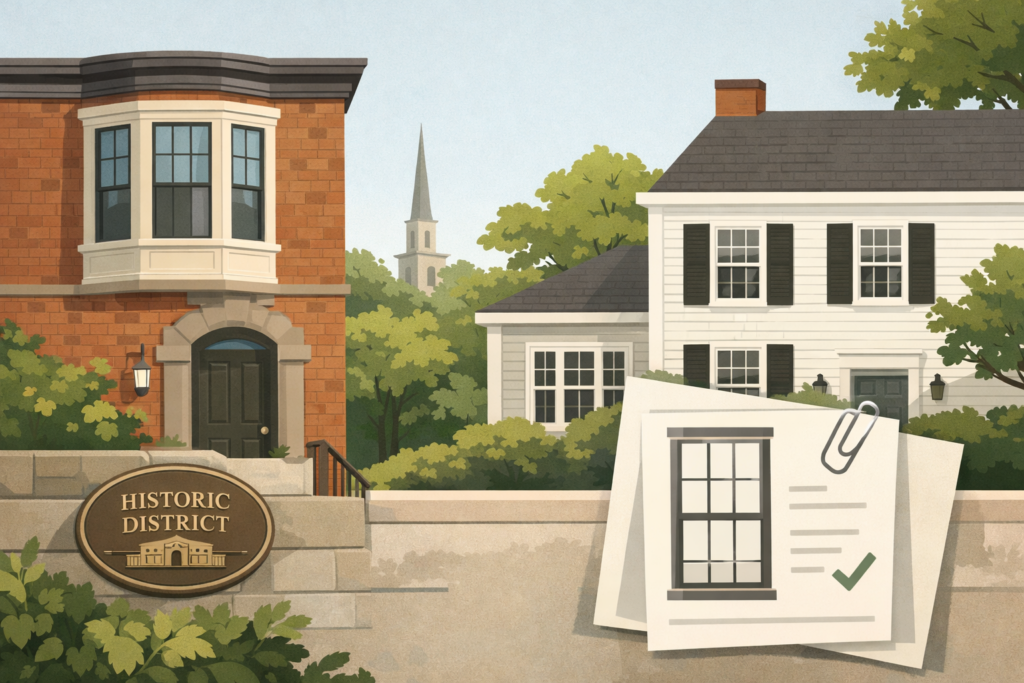
Window replacements may seem routine, but in Brookline’s historic neighborhoods, they can trigger legal action and complicate property transactions. A lawsuit filed against a Babcock Street property owner in January 2023 underscores how seriously the town enforces preservation rules—and why due diligence matters before you buy or renovate.
The town sued a property owner at 179 Babcock Street for allegedly installing windows without approval from the Brookline Preservation Commission, claiming four years of unresponsiveness and willful disregard for historic district regulations. The owner disputes the allegations and claims unawareness of the lawsuit. Town officials say they attempted engagement but faced no cooperation.
Why Historic District Compliance Affects Transactions
Brookline’s Local Historic Districts operate under Massachusetts General Law Chapter 40C, which grants the Preservation Commission enforcement powers that extend beyond typical zoning. Properties in these districts require a Certificate of Appropriateness for exterior changes, including window replacements. Violations aren’t abstract—they create title complications that surface during attorney review and can delay or derail closings.
Buyers in historic districts: Request copies of all Certificates of Appropriateness during due diligence, especially if you notice newer windows or exterior alterations that appear inconsistent with neighboring properties, and budget for potential restoration costs if violations exist.
Sellers planning pre-sale improvements: Consult the Preservation Commission before replacing windows or altering facades in Fisher Hill, Pill Hill, or other designated districts, as unapproved work may need reversal at your expense before you can convey clear title.
What Owners Should Watch in Enforcement
The town’s design guidelines strongly favor wood window retention and restoration over replacement, even when energy efficiency seems to justify vinyl or aluminum substitutes. Enforcement isn’t theoretical—documented cases show the Commission pursuing violations years after installation, with fines structured at up to $300 per violation and each day counting as a separate offense.
Condo buyers: Verify whether your building lies within a Local Historic District and whether the association has obtained proper approvals for past facade work, since individual unit owners can face liability for common-element violations in smaller buildings.
Renovation-minded buyers: Factor Preservation Commission timelines and material requirements into your budget for Brookline homes, as historically appropriate windows typically cost more and require longer lead times than standard replacements available at big-box retailers.
Investors evaluating older properties: Treat historic district status as a material constraint on repositioning strategy, since exterior updates that pencil elsewhere may prove unapprovable or prohibitively expensive when wood restoration and custom millwork become mandatory.
Practical Steps Before You Buy or Renovate
Title insurance doesn’t always flag preservation violations, and standard home inspections rarely assess regulatory compliance for alterations. Ask your attorney to confirm Local Historic District status and request documentation of approvals for any exterior work completed in the past decade. If you’re already an owner facing a violation notice, respond promptly—the town’s patience appears limited once enforcement begins, and delays compound both legal exposure and remediation costs.
Source: Brookline.news