
A porch light should help someone find the steps without lighting up the neighbor’s bedroom. That is the everyday problem behind Brookline’s new outdoor-lighting rules, approved at Town Meeting on November 17.
The changes cover two related issues: how outdoor lights are designed and used, and where their light goes. For homeowners and condo boards, the useful first step is to understand the lights already on the property before buying replacements. For context on the discussion before the vote, see our earlier coverage of Brookline’s exterior-lighting debate.
What do the rules aim to change?
Article 12 sets standards for outdoor fixtures. The general approach is to direct light where it is needed, avoid unnecessary brightness and use warmer white light. The approved text generally limits white light to 3000 kelvin, with 2700K encouraged, subject to its exceptions.
Kelvin describes the color of the light, not how bright it is. A warm-looking bulb can still be too intense or aimed badly. Shielding helps keep light directed toward the intended area rather than up into the sky or toward nearby windows.
Article 13 separately addresses glare and direct light shining onto neighboring private property. Together, the rules make both the fixture and its effect on the surroundings relevant.
Does every outside light have to go off at 11 p.m.?
No. The approved text makes distinctions for entrances and exits, public safety, code requirements and other exceptions. Its general curfew for other lighting is tied to the later of 11 p.m. or the specified period after business or active residential use ends. Motion-controlled lights may operate after curfew with an automatic shutoff after activity stops.
That means a board should assess a light’s purpose before deciding how to control it. Lighting needed to reach an entrance safely should not be treated the same as decorative lighting left on all night.
Will owners have to replace everything immediately?
The approved framework phases in changes. Certain fixes achievable by changing a bulb, adjusting a setting or re-aiming a fixture have a one-year period from the effective date. Other private-property fixture issues generally have five years, with earlier triggers for specified major work. A nuisance or safety-hazard determination can have a shorter deadline.
These periods run from the relevant effective date, not automatically from the Town Meeting vote. Confirm the Town’s implementation guidance and applicable exceptions before turning them into a renovation deadline. Our explanation of what follows a Brookline zoning vote provides more context on the steps between a local vote and a project moving forward.
What this means when buying, selling or managing a condo
Visit a home after dark if lighting is important to your comfort. Look from bedrooms and outdoor areas, not just from the front walk. In a condo, ask who controls the common lights and whether the association has planned work.
Owners can collect fixture specifications, note timers and adjustable settings, and get a contractor’s view on what can be corrected without replacing the whole system. Keep that information with maintenance records for a future sale.
The Bushari Team can help you organize the property questions that matter before a purchase or listing.
Sources: Planning Department confirmation · Approved fixture provisions · Glare and light-spill provisions · Town Meeting results.
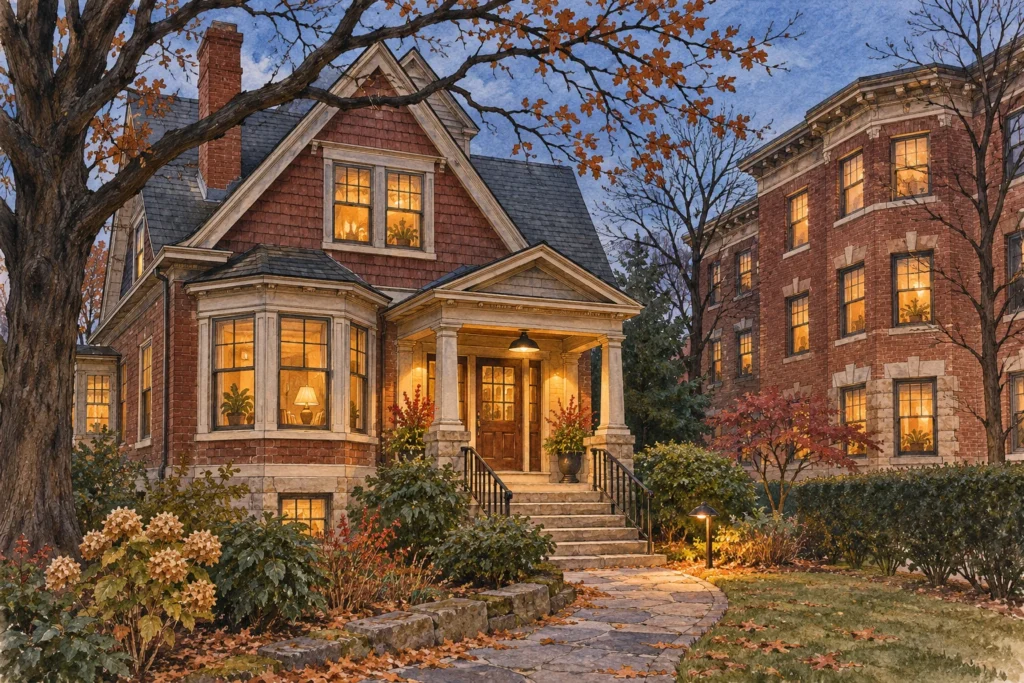
Featured image: AI-generated editorial illustration. The scene is fictional, not a photograph or an approved project rendering.