
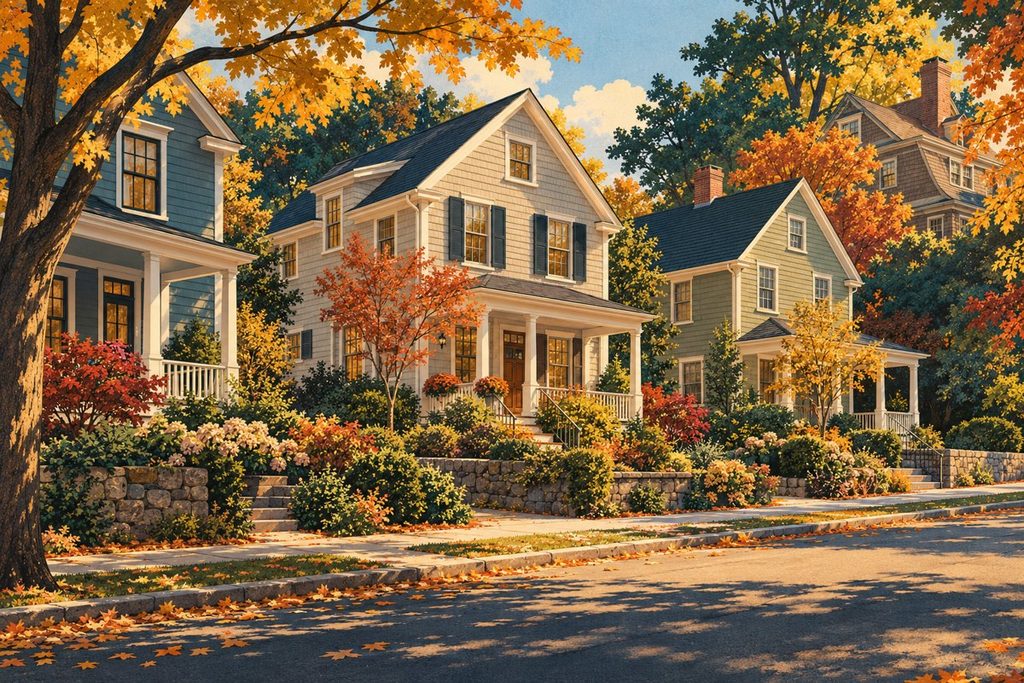
Massachusetts Question 7 asks voters to reconsider how much land a single-family home should need. For Brookline, the answer could affect more than future construction. It could change the options available to a homeowner with a large lot, a family looking for a house, or an older resident hoping to downsize nearby.
Question 7, often called the “starter home” proposal, would open a path to building single-family homes on qualifying lots of 5,000 square feet. The opportunity deserves attention. So does the difference between allowing a home on less land and making that home affordable.
What Question 7 would change
Under the state’s official ballot summary, the proposal would protect single-family residential use on lots that meet three conditions:
- At least 5,000 square feet of land.
- At least 50 feet of street frontage.
- Access to public water and public sewer.
Qualifying homes in districts allowing residential uses would not require a special permit or another discretionary zoning approval for that use. Reasonable local rules, including setbacks and building height and bulk, could still apply. State housing officials could issue implementation guidance or regulations.
A yes vote would adopt the change; a no vote would leave the current law in place. As WBUR explains, Boston would be excluded because it operates under a separate zoning system.
Why the change matters in Brookline
Brookline already has different lot requirements across its neighborhoods, as we discuss in our guide to how zoning shapes Brookline development. The town’s published dimensional table lists the following minimums for ordinary detached single-family homes, excluding separate cluster provisions:
| Zoning district | Minimum lot area |
|---|---|
| S-7 | 7,000 square feet |
| S-10 | 10,000 square feet |
| S-15 | 15,000 square feet |
| S-25 | 25,000 square feet |
| S-40 | 40,000 square feet |
That helps explain why a 5,000-square-foot standard could matter. Its effect would vary considerably by district and property. Some Brookline districts already allow detached homes on lots smaller than 5,000 square feet.
For a larger property, the proposal could create an opportunity to explore dividing the land. But dividing total square footage by 5,000 would tell you very little about what could actually be built. Street frontage, the existing house’s placement, lot shape and the applicable rules would all need review.
A smaller lot does not guarantee an inexpensive home
From a real estate perspective, allowing a house to occupy less land can improve the economics of building it. A builder may have a viable alternative to placing one very large house on an expensive parcel.
But a new home in Brookline would still carry land, construction, financing and development costs. Demand for the location would still influence its price. The proposal contains no sale-price cap or requirement that buyers meet income limits.
My expectation is that some homes created here could still be expensive, even if they cost less than a larger new house nearby. That would expand choices for some buyers without necessarily putting homeownership within reach of a typical first-time buyer.
The same opportunity could matter to residents at a different stage of life. A smaller house with less yard to maintain could appeal to someone who wants to stay near friends and familiar places, a concern explored in our coverage of Brookline senior housing and aging in place. Whether builders deliver homes suited to those residents would depend on the designs and prices.
More housing with practical limits
The Center for State Policy Analysis at Tufts estimates that the measure could produce about 750 additional homes annually statewide, with a plausible range of 350 to 1,200. Its analysis identifies Boston-area suburbs with sewer infrastructure and larger parcels as places likely to see more activity. These are statewide estimates, not a Brookline construction forecast.
The Massachusetts Municipal Association opposes the measure, citing the loss of local planning authority and concerns about infrastructure and municipal services. Those concerns deserve a practical response: a pipe in the street does not, by itself, settle the question of system capacity.
At the same time, I think local planning should leave room for a broader range of homes. A neighborhood benefits when people have options as their families, finances and needs change.
What Brookline homeowners should consider
If Question 7 passes, owners of larger properties may have a reason to reassess their options before selling their Brookline home or planning a major renovation. An additional development opportunity could affect a property’s value, but the cost of realizing it matters just as much.
Before assigning a premium to that possibility, a homeowner would need a survey, a review of the applicable rules and a realistic development budget. Buyers should apply the same scrutiny to any listing advertised as having subdivision potential.
For Brookline, the proposal’s value would depend on the homes it makes possible and who can realistically buy them. Smaller lots could help create more choices. The price, design and feasibility of those homes will determine how useful those choices become.
Considering a sale or a change to your property? Request a Brookline home valuation to discuss how your home, land and current market fit together.