
Brookline Town Meeting approved Article 14, which would let qualifying smaller housing developments in designated Harvard Street districts pay into the Town’s Affordable Housing Trust instead of providing their required affordable homes on site. Brookline Planning confirmed the approval in its November 19 update.
This changes how a development can meet its affordable housing obligation. It does not remove that obligation, approve a particular building or turn a market-rate apartment into an affordable one.
What does “cash in lieu” mean?
It means a payment instead of providing something directly. Here, the alternative is a payment toward affordable housing rather than including the required affordable homes within the same development.
Under an on-site requirement, some homes in a qualifying new building have affordability restrictions while others are market-rate. Under the payment option, a qualifying developer contributes money to the Trust, which can support affordable housing elsewhere in Brookline. For an example of the Trust’s broader work, read about preserving affordable homes at 99 Kent Street.
Which Harvard Street projects are affected?
The change concerns designated Harvard Street Main Street corridor zoning districts. It does not automatically apply to every property with a Harvard Street address.
The Town’s report explains the smaller-project context as developments of 4 to 19 homes, with the approved payment provision referring to projects creating fewer than 20 additional dwelling units. The original filing used a lower threshold; it was corrected to match the spring 2026 change. A separate corridor restriction on alternative payments by special permit was also removed.
For an actual site, the Planning Department should confirm the district, the additional-unit calculation and which payment or permit provisions apply.
Why did Brookline make this change?
The Housing Advisory Board argued that requiring on-site affordable homes can be particularly difficult for small developments. The report gives a simple example: one affordable home in a four-home project represents one-quarter of the homes, even though the underlying inclusionary percentage is 15%.
Supporters saw a payment option as a way to make smaller projects more workable while generating funds the Trust could combine with other resources. The tradeoff is where the affordable housing is created. On-site units put it within the new building; a payment may help housing in a different location.
What could this mean for owners and buyers?
For a property owner considering a small development, the option could change the project’s costs and feasibility. It belongs in an actual development budget alongside acquisition, design, construction, financing and permitting. It is not a reason to assume every corridor parcel is suddenly worth more.
For buyers and renters, the possible effect is on which projects get built and the mix of homes they contain. More feasible projects do not automatically translate into lower asking prices or near-term availability. Those outcomes depend on the individual developments and market.
What happens after the vote?
Article 14 has passed Town Meeting; it should no longer be described as awaiting that vote. Zoning amendments still go through the applicable state review and implementation steps. The next practical questions are when the change can be used and which projects qualify. Our guide to what follows a Brookline zoning vote explains how zoning permission differs from approval of a particular development.
Contact The Bushari Team to discuss a Harvard Street property and the development questions relevant to it.
Sources: Planning Department approval confirmation · Article 14 explanation and corrected threshold · Town Meeting results · Zoning amendment process.
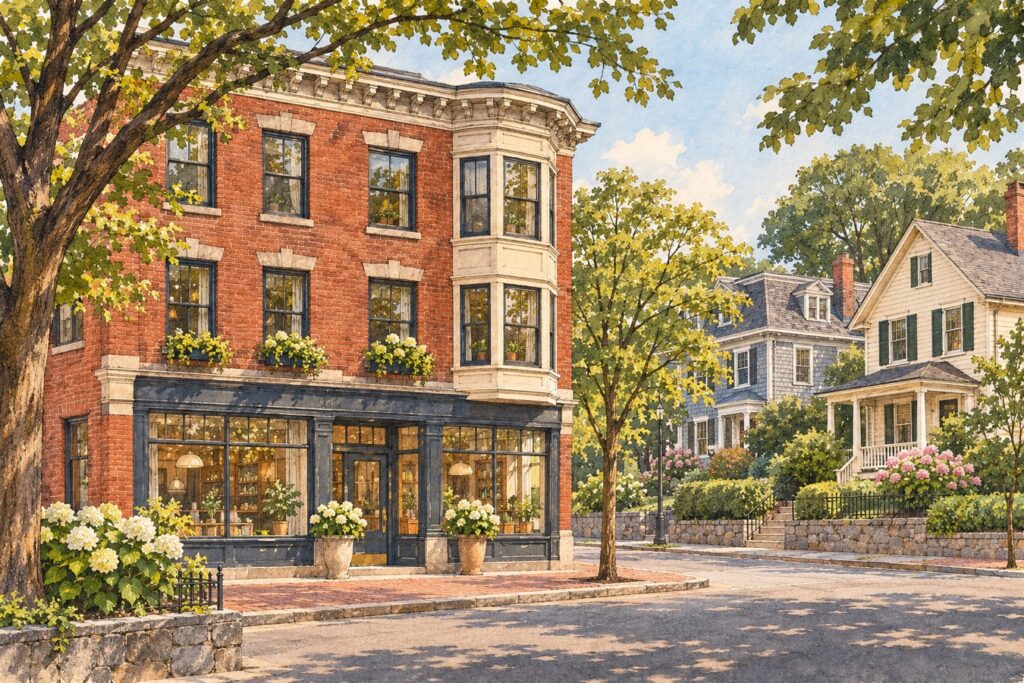
Featured image: AI-generated editorial illustration. The scene is fictional, not a photograph or an approved project rendering.