
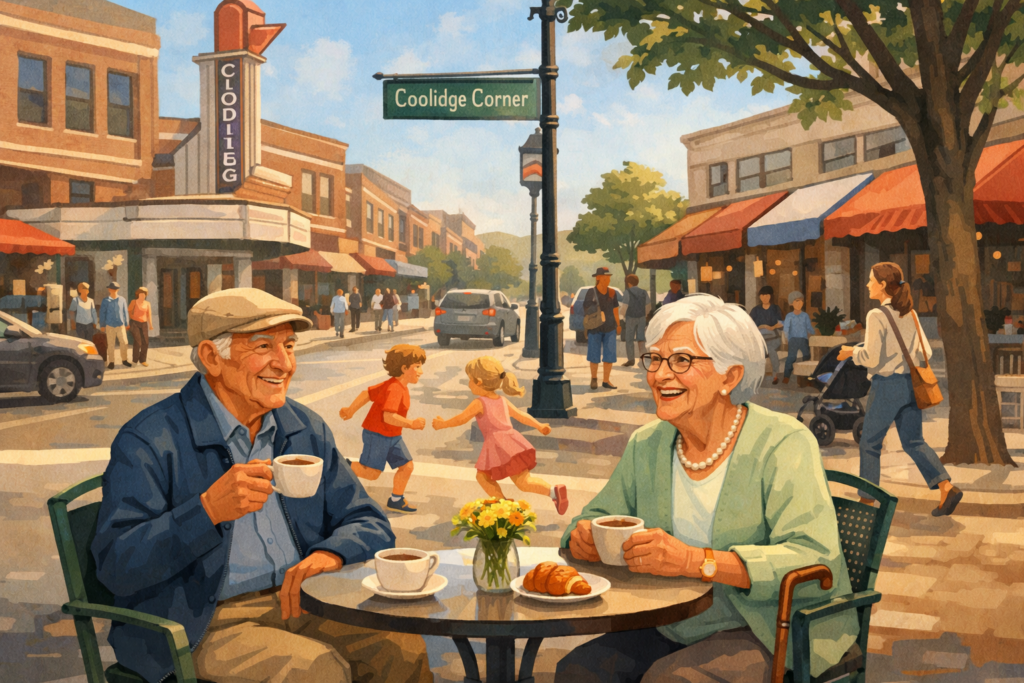
When a town formally certifies businesses for accessibility and service to residents with mobility needs, it’s signaling more than goodwill—it’s acknowledging a demographic reality that shapes neighborhood appeal, walkability, and real estate demand. Brookline’s Community Aging Network has launched an “Age-Friendly Businesses” campaign, encouraging local establishments to adopt measures like curbside service, staff training, and accessible product placement. While the initiative targets merchants, the underlying trend—Brookline’s aging population and the town’s institutional commitment to serving it—has practical implications for buyers, sellers, and landlords evaluating micro-market positioning.
Why Brookline Is Betting on Age-Friendly Infrastructure
Brookline became the first community in New England certified as an Age-Friendly Community by the World Health Organization in December 2012, and the ninth municipality in the United States to join the WHO Global Network. That wasn’t a symbolic gesture. In 2010, Brookline had more than 10,000 residents aged 60 and older—over 18% of the town’s population, with projections showing a 41% increase in the 60+ cohort between 2010 and 2030. As of recent census estimates, 20.4% of Brookline’s population is now aged 60 or older.
The Age-Friendly Business checklist includes accessible customer assistance phone numbers, large fonts, drop-off and delivery services, and employment opportunities for older adults. Coolidge Corner establishments like Michael’s Deli have already signed on, and the campaign reflects broader infrastructure investments, including the ongoing MBTA Green Line C Branch Accessibility Project.
What Buyers Should Watch
Accessible, walkable locations are gaining traction. The presence of age-friendly businesses and accessible transit may increase demand for condos and smaller single-family homes in walkable pockets—particularly along the Beacon Street corridor and near Coolidge Corner.
Properties with universal design features may command premiums. Accessibility features—step-free entry, wide doorways, in-unit laundry, elevator access—appeal to buyers prioritizing aging-in-place capabilities and mobility-friendly layouts.
Neighborhood infrastructure investments protect value. Towns that invest in accessibility infrastructure tend to retain established residents who contribute to tax stability and neighborhood continuity. Brookline’s policy commitment to universal design may protect property values during demographic transitions, particularly in neighborhoods with strong walkability scores.
Transit-oriented properties gain appeal. The Green Line accessibility upgrades signal long-term investment in barrier-free public transportation. Properties within walking distance of improved stations may see increased appeal among buyers prioritizing car-free or car-light lifestyles.
Ground-floor and elevator building inventory addresses broad demand. Single-level living options and buildings with elevator access address practical mobility considerations that matter across age groups—from families with young children to buyers with temporary or permanent accessibility needs.
Rental market dynamics shift with accessibility priorities. The age-friendly push may create rental demand for accessible units near services, but it also signals that Brookline is prioritizing livability over density in certain corridors—monitor zoning and streetscape projects that could affect multifamily development timelines.
Long-term value depends on infrastructure pace. Brookline’s institutional commitment to accessibility—from business certification to transit upgrades—suggests a policy environment that values inclusive design. Buyers evaluating long-term hold value should consider whether these infrastructure investments will keep pace with projected demographic growth.
Market positioning requires universal design. As accessibility becomes a standard expectation rather than a niche feature, properties lacking basic universal design elements may face competitive disadvantages, particularly in walkable commercial districts where the age-friendly business network is most concentrated.
Source: Source