A $3M luxury townhouse bid for 16 Williams St highlights the tension between affordable housing preservation and developer demand in Brookline's tight market.
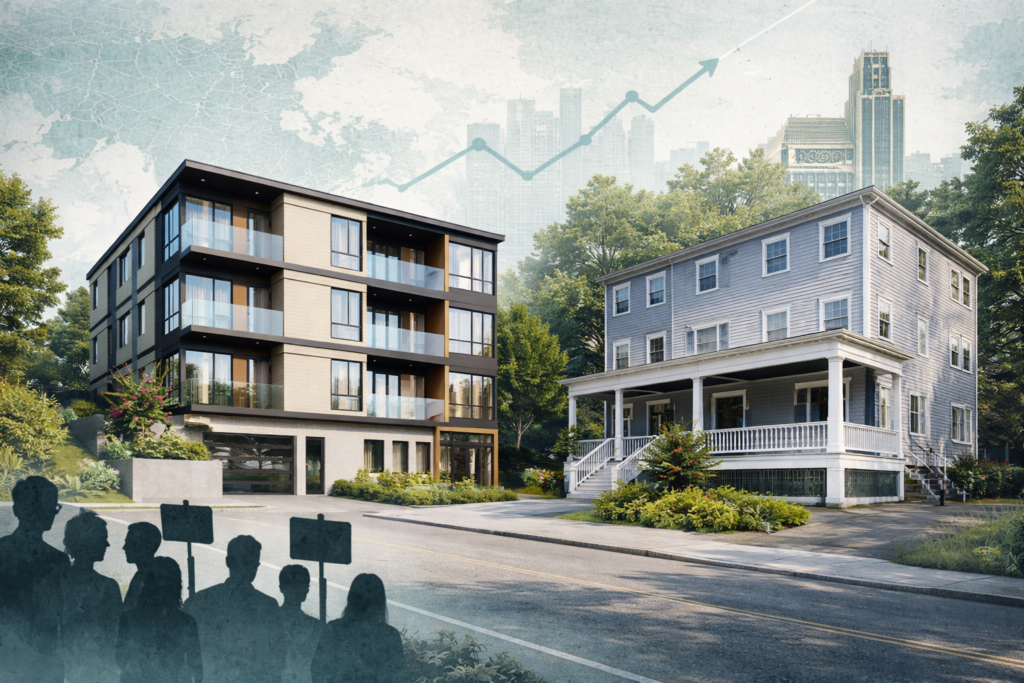
When a developer offers $3 million for a small affordable housing site, it tells you everything about land scarcity in Brookline. The town is now racing against the clock to find a nonprofit buyer for 16 Williams Street, a property currently serving residents with disabilities, before it converts to luxury townhouses. The urgency reflects a broader dynamic affecting Brookline homes across all price tiers: limited inventory, intense competition for sites, and the ongoing challenge of preserving affordability in a market where land values consistently outpace housing policy.
Why This Property Matters Beyond One Address
The 16 Williams Street situation isn’t an isolated case—it’s a visible example of what happens when affordable housing stock sits on land worth multiples of its current use value. Developers recognize that Brookline’s zoning, proximity to Boston, and school quality create reliable demand for high-end residential projects. When an existing affordable property lacks permanent deed restrictions or faces expiring subsidies, the math often favors conversion. The town’s limited window to secure a nonprofit buyer underscores how reactive, rather than proactive, many preservation efforts become.
Buyers in competitive segments: Expect continued pressure on entry-level and mid-market inventory as land suitable for modest housing faces constant redevelopment interest, particularly in Brookline neighborhoods near transit and schools where site assembly is difficult.
Sellers with older multifamily properties: Understand that developers may approach with offers well above typical residential comps if your site allows by-right or feasible luxury redevelopment, especially for properties near Coolidge Corner, Brookline Village, or Washington Square.
What Buyers and Investors Should Watch
This case highlights a market reality that affects purchase decisions: Brookline’s affordable housing preservation efforts can create uncertainty around certain properties and neighborhoods. If the town successfully intervenes to keep 16 Williams Street as affordable housing, it signals willingness to use regulatory or financial tools to block conversions. If the developer prevails, it reinforces that highest-and-best-use economics tend to win absent strong deed restrictions.
Condo buyers near redevelopment sites: Track whether luxury townhouse projects like the proposed 16 Williams Street development move forward, as they may shift neighborhood character and price dynamics, particularly if they replace longstanding affordable or workforce housing.
Investors evaluating small multifamily assets: Recognize that properties serving lower-income tenants may attract developer interest if land value significantly exceeds building value, creating potential exit opportunities but also exposing you to town scrutiny or regulatory delays if preservation advocates mobilize.
The Broader Implications for Brookline Real Estate
The tension between affordable housing preservation and market-rate development isn’t going away. Brookline’s high land costs mean every site decision involves trade-offs. When towns intervene to save affordable units, they often rely on nonprofit buyers or subsidies that take time to arrange—time that favors developers with cash ready. For real estate participants, the lesson is that Brookline’s inventory constraints affect all segments, and policy responses tend to be reactive rather than systematic.
Renters in older buildings: Be aware that properties without strong affordability protections may face sale and redevelopment pressure, particularly in high-demand pockets where luxury projects pencil out, potentially displacing existing tenants even in buildings that aren’t formally designated as affordable housing.
Source: brookline.news
About Elad Bushari
Elad Bushari is an Executive Vice President at Compass and a leading Brookline, Massachusetts real estate agent with over $1 Billion in career sales and 22+ years of experience. He represents buyers, sellers, landlords, tenants and developers across Brookline's most sought-after neighborhoods, including Coolidge Corner, Fisher Hill, Chestnut Hill, Washington Square, and Brookline Village.
A former Inc. 5000 founder and REALTOR® Magazine "30 Under 30" honoree, Elad specializes in luxury single-family homes, condominiums, and multi-family investments throughout Greater Boston. His data-driven approach and deep local knowledge help clients navigate Brookline's competitive market with confidence.
Elad Bushari's Profile