
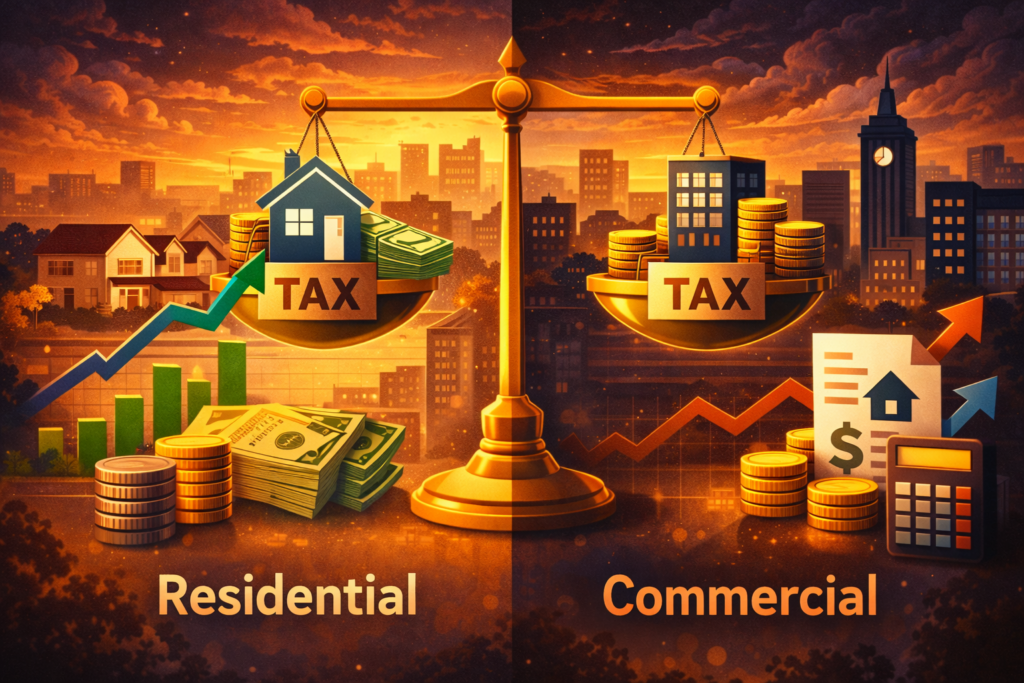
Brookline’s FY2026 tax policy continues a long-standing approach that treats homes and commercial buildings differently, and that choice matters for every buyer, seller, and investor in town. The split, or “classified,” tax rate directly affects operating costs, pricing strategy, and long-term investment returns, while still sitting within the guardrails of fair housing and other applicable laws that protect people—not property types.
How Brookline’s Split Tax Rate Works
Under a split tax system, the town sets one rate for residential property and a higher rate for commercial, industrial, and personal property. In practical terms, Brookline keeps the residential rate lower to moderate the impact on homeowners, while shifting a greater portion of the property tax levy onto businesses and commercial parcels.
For residential property owners, that means the tax rate per thousand dollars of assessed value is significantly lower than what a commercial building pays on the same assessed value. For commercial owners—whether it is a small storefront, an office building, or a mixed-use asset—this higher rate becomes a core line item that influences net operating income, cash flow, and ultimately what investors are willing to pay.
What This Means for Homeowners and Buyers
For homeowners and owner-occupant buyers, the split rate offers some protection in a high-cost market. A lower residential rate, combined in many cases with a residential exemption for primary residences, helps keep annual tax bills from climbing as sharply as they might under a single, uniform rate. That can make it easier for first-time buyers, downsizers, and long-time residents to stay in the community.
From a real estate decision-making standpoint, this affects how buyers evaluate monthly costs. Mortgage principal and interest get most of the attention, but the property tax line is the quiet variable that can tilt a home from “comfortable” to “stretch.” A knowledgeable agent will walk every buyer—regardless of race, national origin, family status, disability, or any other protected characteristic—through the tax implications of each property in a neutral, factual way, keeping clear of any language that could steer people toward or away from specific neighborhoods or buildings.
Impact on Commercial and Mixed-Use Investors
On the commercial side, the higher rate means owners must plan for a heavier tax burden relative to assessed value. That directly affects pro formas: taxes eat into net operating income, which affects debt coverage, cash-on-cash returns, and cap rates. For mixed-use buildings, the classification of space (residential vs. commercial) can be a crucial detail in the underwriting process.
Investors should factor the town’s ongoing reliance on the property tax levy and its commitment to a split rate into long-term hold strategies. A market like Brookline, with strong demand and careful fiscal management, can often support higher rents and valuations, but only when those are justified by the property’s features, location, and condition—not by any assumptions about who the tenants or buyers might be. All projections must be made in a way that is consistent with fair housing and anti-discrimination laws, focusing strictly on lawful business considerations.
Strategy for Buyers, Sellers, and Landlords
For residential buyers and sellers, the best strategy is transparency:
- Estimate annual property taxes using current rates and assessed values, and revisit these numbers regularly.
- Include taxes in affordability conversations alongside insurance, utilities, and maintenance.
- Avoid any commentary about the “type of people” in an area; stick to objective data like transit access, building features, and public information about schools and amenities.
For commercial owners and landlords, it is essential to:
- Incorporate higher commercial taxes into rent-setting and renovation decisions.
- Recognize that many tenants value Brookline’s services and amenities that those taxes help fund—things like streetscapes, safety, and public infrastructure.
- Market properties based on legal, nondiscriminatory factors such as foot traffic, visibility, condition, and zoning, never on protected classes.
Brookline’s FY2026 split tax rate is not just a line in the budget; it is a signal about how the town wants to share the burden between homes and businesses. For residential owners, it softens the blow of rising costs in a competitive market. For commercial and mixed-use investors, it demands sharper underwriting and careful planning. In every case, successful real estate decisions in Brookline now require a clear understanding of how the tax structure works—paired with a firm commitment to fair, lawful, and inclusive practices for everyone.
Source: FY 2026 Brookline Financial Plan